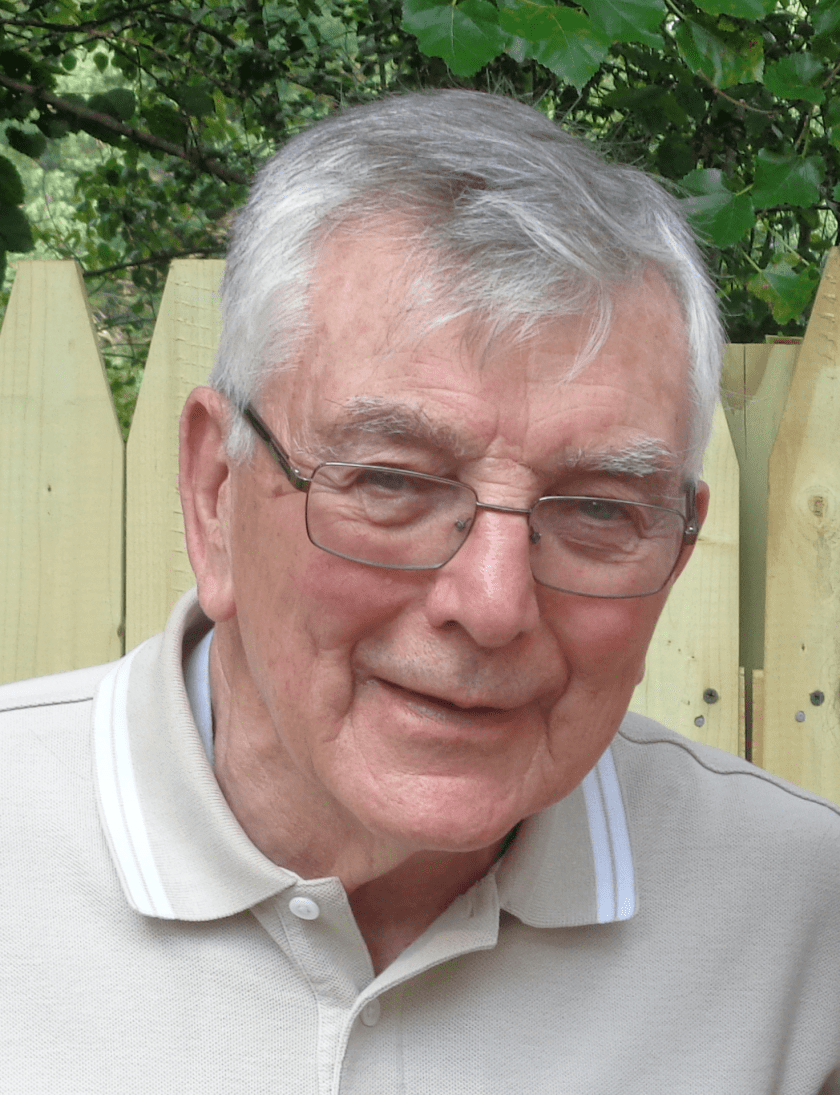
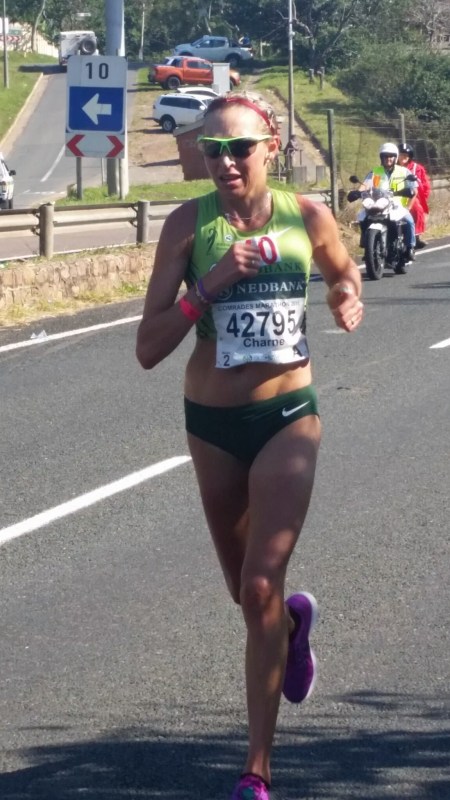
COMRADES DOCTOR GIVES MEDICAL ADVICE

Dr Jeremy Boulter has been responsible for the medical facilities at Comrades for many years and has been involved with the facilities for the last 38 years – 2017 will be his 39th consecutive year. I asked him how he had got involved with the Comrades medical facilities and that was the subject of my previous blog but in addition to that he gave me the article he wrote for the Pre-Race brochure for the 2014 Comrades which he tells me is as applicable today as it was three years ago and it’s certainly worth publishing on its own and given the importance of the subject here it is.

My thanks to Dr Jeremy Boulter and to Comrades Marathon Association for the use of this article.

jeremy-boulter

Comrades Marathon has focused attention on the health, fitness and responsibility of runners. The following is aimed at providing advice as to what runners can do to prevent themselves from ending up in a situation where they are in need of medical attention. It is important to remember that medical attention is retro-active, ie. we only respond when a runner is in trouble. Prevention is better than cure, and the prevention of problems is in the hands of you, the runner.


WHAT CAN RUNNERS DO TO PREVENT SERIOUS HEALTH PROBLEMS?

Firstly, it is important to appreciate that runners who collapse after they have finished a race, even if they require urgent medical attention, will almost certainly recover fully. However, those who collapse during a race are most probably suffering from a serious and potentially life threatening condition. So, what can be done to prevent this latter situation from arising?

The first thing that runners can do is to make sure that they are adequately prepared. This means that they should have done enough training. They should also do their best to ensure that they have no underlying medical problems, of which they may or may not be aware. The following is a list of questions that runners should ask themselves. If you have answered “yes” to any of these questions, it is strongly recommended that you see your doctor or a Cardiologist for a full check-up before starting the Comrades.

Has your doctor ever warned you that you have “heart issues” or that you should only be physically active or do sports under medical supervision?

  • Are you overweight or underweight?
  • Is your girth over 88 cm (for women) or 102 cm (for men)?
  • Are you over 35 and have not been physically active for a long period of time?
  • During blood pressure monitoring, have you ever recorded high blood pressure?
  • Have you ever been diagnosed with high cholesterol?
  • Do you smoke or have you smoked extensively in the past?
  • Has anyone in your direct family ever suffered from high blood pressure, calcification of the coronary blood vessels/heart attack, blood sugar disease, or stroke?
  • Do you have diabetes?
  • In the past few months, have you had the sensation of a ‘racing heart’, problems breathing, or chest pains, whether while at rest or during athletic activity?
  • Are you taking any medications for high blood pressure, heart or breathing conditions?
  • Do you ever feel dizzy or pass out, whether at rest or during physical activity?
  • Do you have any problems with your musculoskeletal system, which worsen during physical activity?
  • Remember, any of these symptoms could be indicative of a serious underlying medical problem.


Another important point is to prepare yourself to get used to the fluids etc. available on race day. Don’t drink a fluid during training that will not be available on race day. You may well not be able to tolerate these fluids if you are not used to them. The same applies to food.

Don’t try anything new on race day. This also includes running shoes.

Do not run if you have been sick in the 3 weeks prior to the race.

A cold is different ie the symptoms are “above the neck” with a runny nose, possibly a mild sinus type headache, and a feeling of not being 100%. BUT you don’t feel really sick.

If you do run, then be extra careful and be aware of any untoward feelings and pull out. However, if you have had a temperature, generalised aching body, chest symptoms and you feel pretty miserable then that is Flu and you should not be running. Similarly, if you have needed anti-biotics then don’t run.

Do not return to training, or run the race, after illness or injury without first being cleared to do so by your doctor.

During the race be aware of any unusual symptoms that may develop eg chest pain, dizziness, severe nausea, unusual shortness of breath, change in your running style, confusion and disorientation. If this happens, stop running and seek medical attention. It has become apparent over many years that people feel it is more important to finish the race than be concerned about their health. [Or is it a matter of pride?]

DO NOT TAKE ANY MEDICATION AT ALL, either before or during the race, especially anti – inflammatories [eg. Voltaren, cataflam etc].These are commonly called N.S.A.I.D’s. They are a class of drug which reduce pain and inflammation after an injury. However they can have serious side effects. One of these is irritation of the lining of the stomach, causing an ulcer. This will cause pain, but can result in [sometimes catastrophic] bleeding. Another serious problem is the effect on the kidneys. It has been shown that NSAID’s constrict the artery to the kidney, reducing the flow of blood through the kidney and thus reducing its ability to filter waste products. Combine this with dehydration, and Acute Renal Failure [ARF] can result. This can be fatal. There are increasing numbers of runners developing ARF after Comrades, and one of the major contributing factors to this trend is the taking of anti-inflams during the race. Renal Failure is a serious condition and can be fatal.


Not only NSAID’s are dangerous. It is known that Paracetamol [commonly known as Panado] can cause Liver and Kidney damage in very high doses. Evidence now shows that it can also damage Heart muscle, causing ECG changes similar to that of a heart attack. Although these effects are usually only apparent with high doses, when dehydration is present kidney function is reduced and metabolites can build up in the body, sometimes to toxic levels. This could cause heart problems as well as affect the kidney. Anti-cramp medication can also be a potential problem. It clearly states in the packaging that they should not be taken in the presence of dehydration. When this is present problems can arise. If one considers that about 45% of the runners who come into the Medical Tent after the race are dehydrated, then one can see that taking products like these could put runners at serious risk!


PAIN!

Pain is a sign that all is not well with the body. In my opinion, any runner who needs pain killers before the race should not be running. They are not fit enough!

Pain that develops during the race indicates that some damage has occurred. It may be of a minor nature, but could be something more serious. If the pain reaches a degree where a runner cannot continue, then he/she should stop running and climb into one of the rescue busses. DO NOT TAKE PAIN KILLERS.


FLUIDS.

Ensure that you take in adequate fluids. During training you will have reached an idea of how much and how often you need to drink. Approximately 500ml per hour should be adequate. However, this is just a guide. Each runner is different. Do not simply start filling up right from the start, rather drink when you are thirsty.


FOOD.

Make sure you take in enough food to keep up with your energy requirements. Don’t try new products on race day. If you are going to take things like Goo’s, then make sure you have used them before.


My appeal to runners is that they demonstrate a great degree of self-responsibility. Take care of your health. Make sure that you are adequately prepared to run Comrades. The following is a list of the basic principles every runner should adhere to.

DO drink enough.

DO eat if necessary.

DO listen to your body.

DON’T run if you are not fit enough or not properly prepared.

DON’T run if you have been sick or on anti-biotics in the three weeks   prior to the race.

DON’T take ANY medication during the race.

DON’T be afraid to bale.

Remember, the aim is to enjoy the race and finish in a reasonably healthy state. It is your body, and your responsibility to care for it! Be sensible, take note of what is happening to yourself, and make responsible decisions.

If you start running into trouble, pull out before it’s too late.

After the race it is important to make sure that you take in adequate fluid, to correct any minor level of dehydration which may be present, as well as to monitor your urine output. If you have not been passing much urine during the race it may be due to the presence of a hormone called ADH, which can be released by physical stress. If so, you will start passing large amounts of urine very soon after finishing. However, if you continue to pass very little, or none at all, late that day or night, it may be indicative of a kidney problem such as renal failure. One should then seek medical attention.


Rest is also important. Get over the initial stiffness and then start with some gentle jogging. Don’t get into any serious running too soon. Let your muscles and joints recover from Comrades!

Dr Jeremy Boulter

First Written in 2014
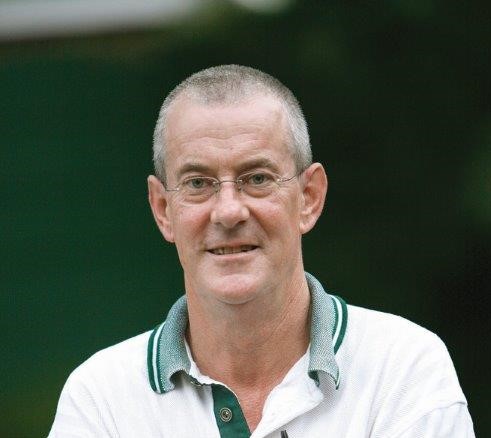
           

COMRADES MEDICAL BOSS – DR JEREMY BOULTER


Virtually every runner in Comrades is aware of the medical facilities offered by the organisers and they know about the Medical Tent at the finish and most know that it is the biggest temporary medical facility in a the world outside of a war, disaster or conflict zone. 

Most runners also know that it’s that it’s the one place they don’t want to visit on Comrades day. The one place they don’t want to go anywhere near when they finish their gruelling journey over the almost 90km between Kwa Zulu-Natal’s two cities and especially they don’t want to be brought into the facility by ambulance from the road before they even reach the finish.

In fact they would prefer it if they leave the end of Comrades with no knowledge at all of what the inside of the Medical Tent looks like.

The Comrades medical facilities, as much as the runners would prefer to avoid going anywhere near them, form a very important part of the world’s greatest ultra road race and without the facilities offered there would be tragedy. It’s really that simple.

The man who has been responsible for overseeing in medical facilities for many years is Dr Jeremy Boulter who has been part of the medical team for the last 38 years – 2017 will be his 39th year, and that is some going.

I had the opportunity to chat to Jeremy and I asked him about his involvement in Comrades and more specifically with the medical facilities and I started off by asking him how it all started and whether he had in fact been a runner.

jeremy-boulter

DJ:      How did you first get involved in the medical tent facilities to begin with way back in 1979 and had you in fact been a runner and sort of drifted into the job in the medical facility because you were a doctor?

JB       No, I had never been a distance runner. At tea time one morning in May 1979, when I was an Intern at Edendale Hospital, Dr. John Godlonton asked me if I would like to help him in the medical tent at the finish of Comrades. My reply was “yes, what do I have to do?” “Oh, just put up a couple of drips on dehydrated runners” was his reply. So began an association with The Ultimate Human Race which has lasted 38 years.


DJ:      It was a fairly small operation back then when you compare it to what we have now. What did you have to cater for the runners at the end of the seventies?          

JB:      Let’s go back to the very beginning.

In 1976 Dr. John Godlonton, a Paediatrician at Edendale Hospital in Pietermaritzburg, heard of an acquaintance who had been admitted to hospital in a state of dehydration and Renal Failure after running the Comrades. He realised that if the runner had received fluid via a drip immediately after the race, he would almost certainly have avoided being admitted to hospital. He approached the then organising committee with a proposal to set up a Medical facility at the finish to treat those runners in need of fluid after the race. This was accepted, and so the Comrades Medical Facility was born.

In 1977 Dr.John, as he was to become known by all associated with the race organisation, set up “shop” in the change rooms at the finish at the Jan Smuts stadium, now known as the Harry Gwala stadium. As far as I know, he worked alone that year, and treated about 5 runners with intra-venous fluid.

Details are a bit sketchy, partly because of the passage of time, but mainly because the medical tent, and the number of patients we had, was so unremarkable, especially when compared to the present. The tent was a 3x3m army mess tent, of the type where there was a gap between sides and roof. We had 4 camping stretchers, one trestle table for supplies, and another for belongings and refreshments.

John was present all day, but the rest of us worked in pairs in 2 hour shifts. There were six of us, all young doctors working at Edendale Hospital.

I worked two shifts and treated one patient! Our medical equipment consisted of a blood pressure cuff and drips. The intra-venous fluids were “donated” by the Edendale Hospital pharmacy. All patients who came into the tent were treated with intra-venous fluids, as the thinking in those days was that they had to dehydrated, we had not heard of over-hydration then. John’s wife, Mary was our “caterer”. She arrived with a basket containing a flask of hot water for tea or coffee, and some rolls for lunch!

To my knowledge, having a Medical Tent at the finish of a race was unique to Comrades at the time. Now it is a requirement stipulated in the rules, as laid down by ASA, at all athletics events.


DJ:      Then with the retirement of the Dr John who was in charge before you, you then took over the running of the entire operation in 1996 and you have watched it grow dramatically over the years you have been in charge and it’s been in your time that the fields have consistently been over 12,000 which has meant bigger staff needed by you and you were in charge in the millennium year with the biggest ever field at around 20,000.

comrades-bollywood-ho-down-020

JB:       Over the years the tent grew in size as the number of Comrades runners grew, and thus patients, increased. We moved from somewhere in the centre of the field to the side, adjacent to the track just before the final straight. We were able to sit outside our tent and watch the runners coming past us. It became a game amongst the doctors to watch these athletes as they struggled past in varying states of exhaustion, to predict who would be coming to visit us in the Tent. We were seldom wrong! Then we were moved to an area behind the stadium, as we had become too big and took up too much space inside it.

Sometime in those early years, our “Medical I.T.” section was born. This was a system to inform the public which runners were in our tent. It consisted of a blackboard at the entrance to the tent, on which the patients’ race numbers were written in chalk. When discharged, the number was simply rubbed out. A far cry from our current set up, where we have laptops linked to the information tent and the main Comrades data base!

We have also introduced a mini laboratory into the tent. This enables us to have vital blood parameters of our patients, such as blood Sodium levels, available within a few minutes, which have a direct bearing on the treatment.


DJ:      How do you know the numbers you need in terms of specialists and doctors, nurses, etc. You told me previously that you have a three bed ICU section in the medical ten. Is that just a guess and a hope that it’ll be enough or do you look at different requirements on the Up Run versus the Down Run?

JB: The staffing of the tent has grown year by year as the size of the field has increased. We treat between 2 and 4% of the field, so I know roughly how many patients we’re likely to have and so how many beds and doctors we will need. We currently have about 40-45 Interns, 20 Medical Officers, 8-10 Specialists and about 20 nurses working in the tent, as well as the mini-lab and admin staff.

The ICU size is essentially governed by availability of space and essential equipment. Is it enough? It has to be!!! Whether up or down, our preparation is the same, and there is not really any difference in patient numbers or the type of problems we see.


DJ:      Are you responsible for the medical staff who are out on the road as well and are you in touch with them? So in other words if there’s a runner who is in trouble and is picked up by one of the ambulances do they contact you for instruction based on what they find?

JB:      Yes, I am responsible for everything Medical to do with Comrades. We have a medical JOC adjacent to the tent, which is in control of, and in contact with, all the ambulances, rapid response cars and personnel out on the route. I can communicate via radio or cell phone with them if necessary.


DJ:      Is there a team making the decisions when you have a seriously ill runner or does that all fall on your shoulders alone as to whether this case is hospital or worse – ICU or not and that one can be treated in the facilities you have and discharged.

JB:      Yes. The specialists are each allocated an area of the tent for which they are in charge, and they make all necessary decisions for their section. Obviously if there is a complicated case, then other specialists and I will be involved in the consultation and decision making.


DJ:      I’m going to put you a bit on the spot now. How much of what you see in the medical tent do you think is caused by inadequate training where the runner has simply not done enough?

JB:      I think the level of training plays a part in the “state of exhaustion” of our patients, but not so much in the “medical problems”. Let me explain. Everyone is going to be really tired and sore after running 87km! The degree of suffering will be directly related to the amount of training and fitness of the runner. However, the serious cases we see are almost invariably due to runners taking part when they are unwell, or have been ill shortly before the race, have been inadequately hydrated or [probably the most serious] have taken medication [eg analgesics and anti-inflammatories] during the run.


DJ:      Where in the field in terms of time, do most of your customers to the medical tent come from?

comrades-bollywood-ho-down-030

JB:      80% of the field finishes in the last 2 hours, and that’s when we get hectic! We quite often get runners coming into the tent up to 2 hours after the final gun!

comrades-bollywood-ho-down-025

So there you have it. Should you have the misfortune of ending up in the medical tent you can rest easy knowing that you are in good hands with Dr Jeremy Boulter and his team of around 85 trained medical staff ranging from specialists to nursing sisters with an ICU section and ambulances out on the road.

My biggest wish is that on the 4th of June you don’t get to meet any of these really nice people.


February 2017.


HELEN LUCRE 1-2-3 TIMES A LADY COMRADES CHAMPION :

I first met Helen Lucre shortly after she arrived in South Africa in 1980 when she and I found ourselves, of all places, in Pretoria, we both arrived at Harlequin Harriers as our running home. Helen had decided that she wanted to do some running in her new home in South Africa and what better place to start than with a bunch of guys who were able to go out and run 30kms a week or two after running this thing she had heard about called Comrades which she had listened to on the radio a few weeks before.

If the people at “Quins” could do that then they had to be the people who would best suit her to join. And that is how our very long friendship started.

When I chatted to Helen I asked her whether she had done any running in her home country of New Zealand?

HL:     No. Not really. I played a fair amount of sport. I had been travelling for about 3 or 4 years and I had met a couple of guys when I was skiing in Austria who were runners and they suggested that I should come to South Africa with them, which I did and that’s how I ended up getting into running as a sport.

I had always been quite fit and played a lot of basketball and drifted towards Quins to get fit. I started by running the time trial and then I heard about Comrades. I started to build up slowly and then towards the end of the year I had the confidence to try to run a club long Sunday run and by the time we go to early 1981 I was ready to try a marathon to qualify.

I was provided copious amounts of wisdom from all the guys at Quins/Phobians, in retrospect, some good, and some questionable…. The fun side was that if they saw a gap to tease you it was quickly taken. I can recall them telling one poor novice, the worst thing to eat was tomatoes when training for comrades, not sure where that came from other than the fact they knew he loved tomatoes. For a while with input from many, running seemed far more complicated than putting one foot in front of the other!


DJ:      So did you run your first Comrades in 1981?

HL:     Yes I did. I had listened to Comrades on the radio in 1980 and Isavel Roche-Kelly had won and I remember working out that she had run at around 5 minutes per Km and “naively thinking” “I could do that” so I went about qualifying and ran my first Comrades in 1981 and ran my first two out of Pretoria. My first one was wonderful. Everything went right but my second one wasn’t as so comfortable so I started to think this running was not for me. I had run a few Cross Country races and some of the people I had met suggested to stop all the “long stuff” and run shorter events, So I gave up Comrades. In 1983 and 1984 I focused on shorter events, winning Two Oceans, City to City, Joburg Marathon setting records in these events. Then towards the end of 1984 I moved to Durban.

Helen in Comrades

DJ:      You started winning some of the serious stuff like Two Oceans and City to City and set course records before you went to Durban but what was it that changed in terms of your approach to Comrades when you moved?

HL:     I think I got a lot more confident after my success over shorter distances. In February 1985 I ran a 2:47 at Hillcrest Marathon which was then the 5th fastest marathon time in South Africa. It was over a very tough route on a very hot day so I was very happy with that.


DJ:      Were you a believer in LSD as part of your training?

HL:     I never considered myself a seriously elite runner. I didn’t mind racing every week especially the short distances, never thinking “I shouldn’t be doing this” so I did a mix of long and short. Living pretty much on the Comrades route, I did those long 35km runs at the weekend as well as a tri weekly morning run up Cowies Hill. There was a strong middle distance track league in Durban so I would often arrive to race the “trackies” over 3000 meters. It was all great fun.


DJ:      Who did you consider to be your biggest competition in Comrades in those years when you were winning Comrades
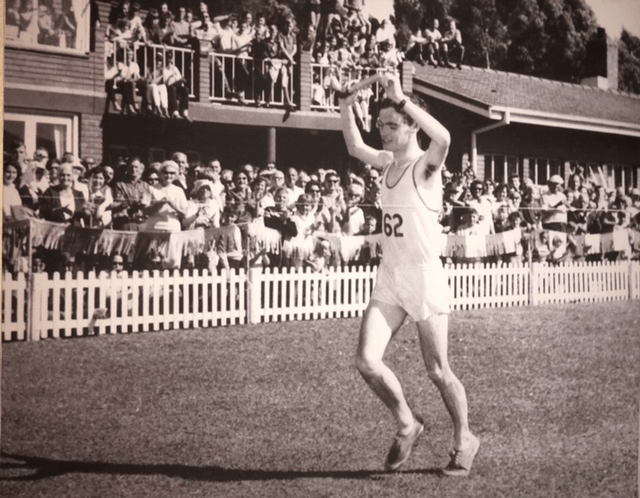
HL:     Lindsey Weight because she had won the two years before my first win, the media and everyone boosted up the “rivalry”. After the first win I thought it would be good to aim for a “hat trick” of wins which I achieved. On my fourth win, attempt I was up against the very talented Frith van de Merwe who took the race to another level. I was fit for the following year, but my interest in Comrades was waning, this was confirmed by accepting a beer at 45th cutting from the Varsity students, sacrificing time and positions. So that was my last Comrades for several years, I went back to Marathons and shorter races.


DJ:      When you dropped out of competitive running you stayed involved in administration. Weren’t you involved in getting what is now the SPAR 10Km Ladies races going?

HL:     You might remember that Clicks started a Ladies Race in Cape Town, we encouraged them to also have an event in Durban which my club, Durban Athletic Club became the organisers. I had the attitude if women wanted to benefit more from sport in general, don’t sit back and complain, do something to change it. To encourage more participation and boost numbers for the ladies race I started a ladies running clinic for novices, first session over 100 arrived. The goal was to take part and complete the 10km distance. The race grew from there, after Clicks pulled out SPAR picked it up and the event has continued to grow.


DJ:      It must feel good knowing that you were instrumental in being involved in the start of something that has been so successful.

 HL:     Yes, it does and what I love is when someone who I think is a stranger, will come up to me and thank me for the encouragement and support I gave them over 25 years ago, they will share how it helped them in life and that is why they still walking and exercising today.


DJ:      And also served on the KZN provincial body as well as the Comrades Body?

HL:     Yes, I was very involved in administration, it was during the ‘sports unification” process. I gave two or so years, but let me say I was a bit naïve and withdrew from administration.


DJ:      When did your broadcasting start and has that been only Comrades?

HL:     SABC often ask me to help with commentary on road races, specifically Comrades and Two Oceans. It is way to keep involved and aware of what is happening in the sport. Through the process I have learnt a lot about media broadcasting, which has been interesting. This year I commentated with Ellie Greenwood, the winner in 2014 who was side-lined through injury. She is very knowledgeable and brought a very enjoyable element to the day’s commentary.


DJ:      You’ve been pretty successful in business as well. Tell me a little about that.

HL:     I’ve been in IT and HR and married both skill sets going on my own in 2004 starting my own IT recruitment and HR consultancy. My running discipline has helped and to date it has gone pretty well.    


DJ:      And to keep fit now. No more running?

HL:     I love the sea and have got into swimming. We have a surf swim group and conditions permitting that is where I head. I jog 2-3 times a week, taking advantage of low tides and running on the beach whenever I can.


DJ:      Finally, is there a little part of you that sometimes says “I wish I could run just one more Comrades”.

HL:     Nope, I really have no desire to run another Comrades. The only way I would even consider it was if I could raise R1m+ for charity or cause that I felt strongly about, but even then I would have to think about it very carefully.


There we have it. The girl we used to call the Wagga Wagga Whirlwind in those far off days at Harlequin Harriers when we thought the girl with the funny accent was from Australia before we knew she was a Kiwi.


BERNARD GOMERSALL COMRADES CHAMPION 1965 :

I have been privileged in the many years I have been associated with Comrades to have met most of the winners from the sixties, seventies, eighties (not difficult there with Bruce) and the nineties but missing from my list of winners I have met is 1965 winner, Bernard Gomersall who came home in record time in the wettest race in Comrades history.
Bernard is one of the elder statesmen of Comrades and is 84 on the 23rd of August which puts him second in line behind Jackie Mekler as the oldest surviving Comrades winner.

He was last in South Africa for Comrades in 2015 but one thing is certain is that when he is next here, I am going to move heaven and earth to meet him.

One man who does know Bernard very well, is my good friend, Tommy Malone who has raced against Bernard in the London to Brighton but never in Comrades and I asked Tommy if he would be good enough to contact Bernard and to get his story for me for themarathon.co

Tommy didn’t hesitate and for that I thank him.BERNARD GOMERSALL COMRADES CHAMPION 1965.docx

 Here’s Bernard’s story:

In my youth I was mad about sport, mainly football. I did try other games like cricket, rugby, tennis. I always wanted to be successful at some sport and the only thing that stopped me playing football for England was my lack of ability. I was useless but I didn’t know it.

I did very little running up to the age of 17. I had qualified as a soccer referee and joined the local athletic club, Harehills Harriers to help me with my fitness on the football field.

I joined in some of the events (mainly track and cross-country) but once again I was rubbish but one day going to a track event in Leeds, the tram I was travelling on was held-up to allow a road-race to pass. When I saw some of the runners go passed I thought that I could do better than that, so I joined the road section of the club and started to improve.

My first attempt at the marathon was in 1958 in Hull and I managed to do 2:44 for 6th place.

That same year Mike Kirkwood a friend of mine from Hull won the London-to-Brighton and thought that if he could win that race I was capable of running it. I had no thoughts then of ever winning the race.

In my first attempt at the Brighton in 1959 I set out to run about 7:25 for a 2nd class standard medal I managed to do 6:15 for a first class standard A medal.

It was a start.

I first heard about the Comrades in 1960 when a lad from Leeds, Dennis Stevenson, came to the club. He had lived in New Zealand and came back to Leeds via South Africa where he had run in the Comrades and finished 6th in 1958. He told me about the steep hills and the tremendous atmosphere generated by the roadside crowds. It sounded wonderful but I knew I would never ever get to see it – or so I thought.

When I was invited in October 1964 by the road-runners club to compete in the Comrades, I had a British winter to face. But this was no different to any other year. We had to train in these conditions if we wanted to have a successful summer. I trained in the cold morning and nights, before and after work, seven days a week. Long runs at the weekend and a fair amount of track work during the week.

It would not have been possible to achieve all of the results without the unselfish support of my dear wife Ruth who looked after me and our four year old daughter Bernadette. As all top marathon runners know it is the wife who makes you a top runner.

When I came to the Comrades in 1965 I must confess that I was very ignorant about any of my opponents.  I had run in the 1959 Brighton when Fritz Madel won and again in 1960 when Jackie Mekler won but I was just another runner and I never got to meet them. So I went into the race knowing very little about anybody.

The celebrations of the 1965 Comrades started at 10.30 pm the night before. I had just got into bed and was about to go to sleep when I was disturbed by a noise on my bedroom roof, It was RAIN and it lasted to the following evening after the race.

I was lulled to sleep by the sound of the rain-drops on the roof. I was further encouraged on race morning by the sight of Jackie Mekler sheltering near the Pietermaritzburg city hall with a look of complete misery on his face. Everybody was complaining about the cold. I asked “What Cold”?

During the race (after about twenty miles) I removed the light sweater I was wearing leaving just the white British vest which I found warm enough, I think this finished off the opposition.

I approached the race in ’65 just the same as in England because I had the same conditions. People accused me of bringing my own weather with me.  They thought it was unfair!!!  I think it still goes down as the wettest Comrades in history!gomersall comrades 1965

I was seconded by well known Comrades personality Derek Palframan who did a splendid job on the day

It may sound very “Big Headed” but on that day nobody would have beaten me. It was my day, thanks mainly to the weather. Also I felt has though I had “feathers in my shoes”.

I came back for the 1968 Comrades but that was a different story altogether. Due to some change in circumstances I was not able to devote as much time to my preparation for the race as I had in 1965.  Then, of course , there was the weather.

It was hot by my standards. I fried losing 17lbs during the race. I was well beaten on the day and finished in 7th place just outside the gold medals (there were just six in those days)GOMERSALL COMRADES 1968

I was not as happy at the finish that time and was assisted by race official Bob Calder.

The London to Brighton was my event. It held priority over everything else I did.

My preparation for the race started three weeks after the completion of the last one and I spent eleven months working for it. No other race was important and all my the thoughts were for the race in September. GOMERSALL BRIGHTON 3

My record of four consecutive wins has not been beaten. Bruce won three on the trot and a Steven Moore from London has won it four times but it took him ten years to do it.

When thinking of the toughest opponents in the Brighton, three names come to mind. The first was Ted Corbitt of New York. He was a great athlete and an even greater gentleman. In the 1964 race he chased me all the way to the finish and was only 58 seconds behind at the end.

The other two were in the 1966 race Manie Kuhn and your good self, Tommy.. Between you, you managed to scare me almost to death. I was so afraid of the two great athletes behind me. How I managed to stay in front that day I will never know. It was the best race I ever ran in.

GOMERSALL & KUHN IN BRIGHTON

This photo in the London to Brighton shows 1967 Comrades winner Manie Kuhn wearing race number 45 in our lead group.  Manie finished second that year. Over my right shoulder you can see John Tarrant who gained “fame” as the “ghost runner” when he came to South Africa to attempt to win Comrades and was not permitted to run officially by British athletics.

Although I had a very successful running career my best memories are of the many lifetime friends I made. I think that these a more precious than all the medals and trophies,

Today’s Comrades is so different to the event I took part in. It is so big. During my recent visits to the race I have been overwhelmed. I have enjoyed every minute. The three day expo, the meetings, the dinners but I don’t think I would like to be competing these days with so many runners, all the crush and the waiting at the start. It’s what each of us is used to and I always preferred small fields.

On 25th July 2014 I moved to the USA after living 82 years in the UK, to live with my daughter and it was the best decision I could have made. After losing my dear Ruth (we were married for 55 years) I was devastated. I was on my own with no relatives nearby. My daughter with her husband, Kevin, and two daughters Beverley and Theresa had moved back to the States in 2000. The two girls were born there in the late 80s. They were now firmly settled. She offered me a home which I eventually accepted. It took three years of paper work to obtain my entry visa, but I now have my green card and I have settled down nicely to life here.


September 2016

ROWYN JAMES – COMRADES RACE DIRECTOR :

One man who seems to have an endless supply of energy and is on the go non-stop is Comrades Race Director, Rowyn James and I managed to catch up with him on one of his flying visits to Johannesburg and sit him down long enough between sponsor meetings to find out a little about the man who drives Comrades and who is largely responsible for making it all come together every year. I started off by asking him when his relationship with Comrades had started.

Photo Rowyn James for souv mag

DJ:      A lot of people are under the impression that your relationship with Comrades started two years ago when you were appointed Race Director but that’s not right because it started way before that because you have run the race 15 times and have a green number. When did your love of this race start and how did it start?

RJ:      It started in 1984. My grandfather was caretaker of a building in Pietermaritzburg opposite the start and we used to gather there yearly to watch the start but I had actually started running fun runs in 1981 when my dad noted that I had an athletic talent at school athletic meets.  I eventually ran my first Comrades in 1987 and ran all 15 consecutively until 2002.   I have Green number 1024.


DJ:      Can you give me something that really stands out for you from your Comrades running days?

RJ:      Two things that will stay with me always. I was the second youngest person to ever get a green number (at age 28) because I was able to start at age 18 in those days and I was presented with my green number by Wally

Hayward.

rowyn and wally

DJ:      In terms of your work career you have a long history of being involved in the sports industry? Is that where you always wanted to be and was the job you have now always what you were aiming at as you travelled your career path?

RJ:      I was born and bred in Irene, attended Irene Primary School and then matriculated at St Albans College in Pretoria, then 2 years national service in Port Elizabeth and after that Standard Bank for a while. I then studied BA business admin at Pretoria University and then in 1994 worked for the late Andrew Greyling in his specialist running sports shop until 1997.  In January 1998 I joined Nike SA until December 2007 as Sports Marketing Manager with a specific focus on the road running category.

Then in January 2008 I was appointed as Race Director of Two Oceans in Cape Town and I held that position until May 2013. I then took a sabbatical after leaving Two Oceans and during December 2013 I was approached by Comrades to consider the position of Race Director of Comrades and I joined Comrades in March 2014.


DJ:      You have a wife and your job requires that you spend a fair amount of time away from home because of the demands of the modern Comrades. How do you manage to balance your time particularly in the first five months of the year leading to the race itself?

RJ:      My wife is a Grade 1 school teacher and all my jobs have required that I do a lot of travelling and I am very fortunate in that she is very understanding and supportive around that.


DJ:      As time passes various things have to change to make Comrades an attractive offering in the world ultra calendar.  I’m sure that people will smile and nod in approval but away from the meetings that decide the changes it’s a very different thing in many cases. Do you find that and how do you deal with it or do you just shrug it off.

RJ:      My career operates with two analogies – DTIP…. “Don’t take it personally” and ” “If you have a perfect event, you have a problem”.   Once something has had the approval of the deciding body or the board or committee then I simply adopt the attitude that it’s not something that I should allow to affect me personally. It’s a business decision and it’s been taken and if it is completely wrong it can always be changed or reversed if need be if it’s shown to have been the incorrect decision.

I want to ensure that the runner has a life changing experience with Comrades. It’s about the athlete and the event. I have been extremely fortunate to experience “both sides of the fence“ so to speak, so I know what the athlete requires and what they in turn experience on race day.

IMG_20160729_164044

DJ:      Do you watch and listen closely to what the runners are saying all the time to continually provide the best product to your customer – the runner.  If so an example?

RJ:      Yes always. I prefer to keep a low profile (it’s not about me) but will always mingle with the crowd and listen to what is being said. An example is the way we loaded the seeding batches this year came from somebody at a club meeting who came up with the suggestion of the way we do it at present and we listened and implemented it. We will always listen to good suggestions.


DJ:      You have a very good team but you are still very hands on with a lot of things and I think of even little things like distance marking of the roads as just one example where you get involved with the team.

RJ:       My work philosophies are TEAMWORK and attention to detail (ATD) but I work closely with the various portfolio teams and whilst I am very much steering the ship I am also supporting and involving myself with the crew and stepping off the ship last.  I find that the various teams appreciate the input, involvement and support whatever that might be.  I believe in getting stuck into the tasks and engine rooms with them.

 IMG_20160729_165304

DJ:      It must be a great feeling as happened this year, to get to the end of a race  and that there was no drug cheating and also to get the results through that the  race was clean as it was for the first 10 men and first 10 women and that generally there were no major problems.

RJ:     It is a great feeling and satisfying but by the same token it’s sad that we should have to celebrate something that should be normal.  In a perfect world there wouldn’t be cheating.


DJ:      The launch of Comrades 2017 is due in a couple of weeks. Are we in for any surprises of any sort?

RJ:      Yes, some exciting surprises, changes and innovations are coming but I’m not going to tell you what they are.   You’re going to have to wait until the launch on the 18th of August.  Change is ultimately what keeps the Comrades brand fresh and relevant.IMG-20160317-WA0011


DJ:      Any other innovations you would like to see coming in over the next few  years and any you can talk about?

RJ:      One I can tell you is that we’re moving the race date to the second Sunday in June from 2018 onwards because of the clash with the Royal show and problems with accommodation and essential support services in Pietermaritzburg.

Another thing we’re looking at in the future is the possibility is reducing the qualifying time back to 4:45 for a marathon. But that hasn’t been decided and confirmed yet. 


DJ:    Finally, it doesn’t take 9 years very long to pass and you just need to blink a       couple of times and those 9 years will have passed and 100th Comrades will be with us.  You may say you’re not but I’m sure that there is a little section inside your Race Director’s head that is already thinking about it.      Am I right?

RJ:    Yes you are. Still just a tiny blinking light in the distance.  Nothing definite but ideas running around and one thought is to see an entry of 30,000  runners but I don’t know if Pietermaritzburg could handle a finish of so many so thought needed there.

Remember too that any novice who finished this year and who carries on every year will be in line to earn their green number at the end of the 100th Comrades          

The other thing we have before that of course is the 100 year anniversary in 2021 since the first Comrades was run in 1921 so that’s going to be another special one.


One thing I can tell you is that it was fascinating sitting chatting to Rowyn and I was really sorry when our time was up as I could have spent hours more talking to him about this “thing” that is certainly my passion and which I have no doubt at all is also his passion and I have a pretty good idea that as long as he is around   my passion will be in good hands.

I’m really looking forward to the launch of Comrades 2017 that takes place on the 18th of August in Johannesburg and all being well I will be able to write a chapter on what will be happening at next year’s race for themarathon.co


29 July 2016

SHAUN MEIKLEJOHN – THE QUIET COMRADES HERO :

One of the things that I have found that Comrades winners have in common, is that they are humble and one of the those who best fits this profile has to be the man who won Comrades in 1995 and who stands in third place in terms of the number of Gold medals he has won with 10, and that alongside Jackie Mekler and just behind Alan Robb who has 12 and Bruce Fordyce who has 11.  Shaun Meiklejohn has 10 Gold medals and very few people know this because Shaun is so quiet and humble about his Comrades achievements and apart from saying that he won Comrades in 1995 he says very little else about his Comrades achievements.

I decided the time had come to find out more about this man so I asked him to tell me something about himself.2016-07-05-PHOTO

DJ:      Where are you from?

SM:     I was born in Pretoria, but I have lived in Durban where I did my pre- and primary schooling, Carletonville where I did my high schooling and I matriculated at Carlton Jones High School in Carletonville.

I went back to KZN to Pietermaritzburg to varsity then back to Carletonville after national service where I worked as an assistant accountant on Western Deep Levels Gold Mine and then back to Pmb where I currently live in Hilton.


DJ:      What attracted you to running?

SM:     It was only in 1981 when I went to university that I joined some of my fellow students who had run Comrades in 1980 with the intention of lining up with them that year. It was really just something to do in our spare time, no real attraction at that stage, it did work up a thirst and would we quench that with ice cold beers!

My first Comrades was in 1982. In 1981 I qualified with a 3:50 marathon at the old Richmond Marathon but was knocked off my motor bike going to lectures one morning so I watched from the side-lines. Bruce Fordyce (black armband) and Isavel Rosch-Kelly won that year. I was hooked after that and I didn’t even run!


DJ:      Did you have any other sporting interests as a child?

SM:     I was a really keen soccer player and even got Western Transvaal colours U16. I started playing golf in my last couple of years at high school and got my handicap down to 5 at one point. I also enjoyed playing squash & hockey up until I left school.


DJ:      What are you by profession?

SM:     Financial Director at Innovative Shared Services


DJ:      Do you have any hobbies or sporting interests other than running?

SM:     I still manage to squeeze in a round of golf, no official handicap, but on a good day I’m an honest 14. I also love to watch the Sharks and Bokke performing at their best, which seems to be a struggle these days.


DJ:      People remember you first for your Comrades win in 1995 but I remember you quite a while before that when you suddenly burst on the scene in the colours of Carlton Harriers and you had everyone in quite a stir because of how much they thought you looked like Bruce Fordyce.

SM:     Folk first took notice in 1989 when I had moved back to Carletonville and trained properly after finishing 17th in 1988 running out of Queenstown, I had set a top 10 as my goal and led the race until the top of Cowies Hill, Sam Shabalala won that year and I finished 5th. Bruce was in the commentary team that year having won the Standard Bank 100km earlier in the year in Stellenbosch. There was a bit of chirping in the studio if I remember correctly…. I must have looked like a younger version of Bruce back then, ha ha …


DJ:      You had been in gold before your win in 1995 but to eventually cross that line to win must have felt amazing! Is it possible to put it into words?

46

SM:     I had 5 golds at that point and even a 2nd place to Nick Bester in 1991. In 1995 I decided to run “full-time” from January and put all my eggs in the Comrades basket. It paid off, I was so confident in my build up and mental preparation that I asked Julie, my wife, at the start if “I looked like a winner”! The race was amazing, I felt in control all the way, running my own race and not panicking when Charl took off after Cowies Hill. I passed him going up Tollgate and opening a 1 minute lead by the finish, I was on such a “high” running into the stadium realising what I had achieved.


DJ:      Your Comrades performances are quite remarkable. In 28 runs you haven’t gone slower than 7 hours have you?

SM:     I have twice. In 1982 I did 7:17 and 2003 I was 7:15, all the rest under 7 hours


DJ:      Your 28 years at Comrades haven’t been in succession and you took a break. Do you think that made a difference and allowed the “old” legs to recover slightly?

SM:     I took 6 years off after 2003, feeling physically and mentally stale and running the last few with niggles. The break allowed my body to heal without a doubt but I had put on around 15kgs so it was a struggle to get running again, it was only after I embarked on a proper eating plan eliminating wheat, dairy, sugar and alcohol, did I shed the weight and I was back in 2010 with a 6:45 …

Finish1

DJ:      Do you intend carrying on running Comrades and getting up to 40 Comrades and beyond? Only one other winner has run 40 Comrades and that’s Alan Robb.

SM:     I don’t think so, at this stage I’m taking one year at a time, enjoying my running, if my body allows then 30 seems like a good time to reassess.

 Finish5

DJ:      How have you managed to balance your running with your business life and family life so successfully?

SM:     It is all about finding the balance, which may mean running at 4:00am so I can get kids to school on time and also making a few sacrifices along the way, in the really competitive days our social life would take a back seat, fortunately I have a really supportive wife and kids that understand my passion for running, even now in my “Master” years.

DJ:      You finished 4th in the 100Km world champs in Japan in 1994. A great performance. Did you find that very different from something like Comrades. A lot of people say that the 100Km is a completely different thing and interesting that it was the year before you won Comrades. Then in 1995 you did the same thing again.

SM:     I was really keen to attempt the 100km distance, I just felt that that little extra distance may suit me. I ran Two Oceans that year in 3:21 so was in good shape, finishing in 6:26 and missing Bruce Fordyce’s SA 100Km record by about a minute. The 100km is not too different from Comrades, the hills in Comrades make up for the slightly shorter distance so if you can handle that you can deal with anything that a 100km event can throw at you, just the support in the form of spectators and drinks is very poor at those other events so you really need to be mentally tough!


DJ:      Then in 1994 you won the London to Brighton. So the mid 90’s were good to you.

SM:     I felt that I needed a confidence booster going into the 1995 Comrades so I chose London to Brighton, I had a good 100km under the belt and South Africans have a good track record at the event. It was tough, again little or no support and a hill called “Ditchlings Beacon”, the equivalent of Polly Shortts to greet you around 80km into the race.


DJ:      For the last 4 years you have won the Master’s category and this year second by something like 42 seconds. What is it that enables you to just keep going year after year and is this still a target?

SM:     It’s the competitive spirit I guess, I try to get the best out of myself on the day, if its good enough to be first that a bonus, it gets tougher every year now as I reach the mid-fifties!


DJ:      Finally, your focus at Comrades now seems to be much more on charities. Tell us about that.

SM:     I would love to do more; there are so many kids that, due to circumstances beyond their control, land up getting involved in activities that get themselves into trouble. Running, in fact sport in general is a great way for them to lead a fit & healthy lifestyle and for those with talent to reach greater heights in terms of personal achievement. I work together with my running club, Save Orion AC, on various projects within local communities to assist those in need.


If you would like to look at the blog with all the details of Shaun’s charities you’ll find it at  Meiklejohn.co  so go and have a look at the work he’s doing and give him your support.

28 Comrades to his credit, 10 Gold medals and all the rest silver and only two slower than 7 hours. That’s not too shabby a record. Shaun we salute you!

July 2016


CHARNE BOSMAN – COMRADES 2016 WOMEN’S CHAMPION :

I hadn’t met Charne Bosman before she won Comrades 2016 but I contacted her nonetheless and asked her whether we could meet for a cup of coffee and a chat for a chapter of The Marathon and she readily agreed.

 When we met I found a charming, down to earth very friendly young lady bubbling over with excitement at what she had achieved just a week before, and why not? She had won the women’s race in the world’s Ultimate Human Race, The Comrades Marathon, and only 23 other women have done that before her since women were first allowed to compete officially in Comrades in 1975 – 41 years ago.

  IMG-20160602-WA0003

I started off by asking her if she had always been a Pretoria girl. 

CB:     No, I was born in Malmesbury and when I was still quite young we moved to East London and then when I was 16 the family moved to Pretoria and I have been here ever since. I currently live in Centurion.


DJ:      So when did the athletics bug bite? 

CB:     Shortly after we moved to Pretoria I started running with my niece (a provincial runner) and then I developed an interest in track running with a focus on 1500m and 3000m and especially in Cross country and within 6 months of moving to Pretoria I had my Provincial colours for Cross country and it just carried on from there between track and cross country and shorter road races up to 10Km.


DJ:   Throughout your career you seem to have slowly moved the distances up as you have got older without trying to do shorter distance racing at too old an age.

Is that a fair comment? So when did you get National colours for the first time and how many times have you had National colours?


CB:   That is what I have done. I always thought that there was no point in trying to compete against people much younger when you are no longer able to do so, so I moved my distances up as I got older to half marathon then marathon and eventually to ultra but ultra wasn’t actually planned at the time. I first got National colours for Road relay at the age of 20 and I have been fortunate to have had National colours 23 times.


DJ: When you say that your move to ultra running wasn’t really planned at the time, what do you mean by that and when was it?

CB:     I moved to Ultra running when I was 37.     I desperately wanted to make the   South African team for the Olympics in 2012 for the marathon but narrowly missed it.   I was very down in the dumps about that and very nearly gave up athletics altogether thinking that there was nothing left and it was my husband, Carel who suggested that I should think about a move to Ultra distance so in 2013 I went to Two Oceans and did my first Ultra and was pleasantly surprised to find myself finishing in second place.

IMG-20160609-WA0006

I then decided that Comrades was worth a “go” so I entered and finished in 5th place in 2013.   I actually came onto the track in 4th and lost 4th place on the track and finished in 5th.   2014 I came back to Comrades and didn’t finish because of ill health and then last year in 2015 I managed a second place to Caroline and so my ultra career had started.

I still run shorter races but I don’t take them seriously at all. If I happen to do well in them it is pure bonus. For example I won the Johnson Crane at the beginning of the year but the time was slow as I wasn’t going out to race hard.    I ran Two Oceans this year but didn’t feel great on the day and ended up in 4th place. 4min behind the leader.


DJ:      One thing I don’t understand and perhaps you can explain. There are two of you who are top runners.  You and Caroline.        You have the same coach in Lindsey Parry yet your strategy towards races in the 5 months before Comrades differs significantly. Who decides that strategy?

CB:    We jointly do. We obviously discuss our ideas with Lindsey and listen to what he thinks. We will then go to the race with a very specific plan that we try to execute the best we can.     lindsey and charne

We will sometimes race against one another in build-up races as we both stay in Pretoria.


DJ:      In early April you had a mishap at home when you slipped and broke your little toe.  It must have been very sore but you said nothing and I’m sure that Lindsey knew about it but he also said nothing so the media knew nothing about it either. Tell me about that.

 CB:     It was very sore and my foot was swollen a day or two after it happened to the point where I couldn’t get a shoe on. I knew that if I didn’t do something that Comrades was gone as I was going to be out too long whilst my toe healed so I did what everyone does. I went and asked Dr Google!

 I found out about HYPERBARIC OXYGEN THERAPY (suggest you Google it if you’re interested) and with the treatments I had I ended I up being out for only two weeks. I broke my toe on the 8th of April and I was back on the road on the 24th. I was very fortunate.


DJ:      And the toe didn’t bother you at all on Comrades day?

CB:     Nothing.

IMG_20160604_113803

DJ:      Now that we’ve mentioned Comrades Day, tell me about your day.

CB:     My day was good. Everything went according to plan and I was happy and content to sit where I was and I came into Durban happy to be in second place and I had no idea at all that Caroline was in trouble until I saw the lights of the lead vehicles in front of me and getting closer all the time and then I started wondering what was happening. When I eventually saw her I couldn’t actually believe it and I caught her and passed her but I didn’t say anything at all to her and at the back of my mind I realised that perhaps I could win this thing but also that Caroline is very strong and could come back at me and then there was the memory of being passed on the track to lose 4th place two years ago so all these emotions were going on.

DJ:      Eventually the emotions must have been replaced by reality that you were going to win when you came in sight of the finish tape.  Are you able to explain what it felt like?

 CB:     Amazing! Just amazing! I crossed the line and one of the first people to get to me was Nick Bester the Manager of the Nedbank team and the first thing he said to me was “Are you crying?”. And I replied simply “Yes”.

IMGP0169

DJ:      So now what happens? Comrades is over but everybody wants a piece of you for interviews and I’m sure you are not back on the road yet.

CB:     No, I’m not.   A rest for a week or two and then short races and quality stuff to the end of the year  and then come January we start concentrating on building the quality longer runs and looking ahead to what I’m going to be doing until the 4th of June next year.IMGP0226


And there you have it. The story of a young lady who has come a very long way and travelled many kilometres to get to that finish line of Comrades – The Ultimate Human Race, ahead of the rest of the women in the field on the day of the race.

We wish you well Charne. You certainly deserve it!


 6 JUNE 2016

AMIT B. SHETH – COMRADES THE INSPIRATION

One of the amazing things that I have discovered about doing what I do as far as Comrades is concerned is that that I have made some amazing new friends and some of them I have never even met.

One such person is Amit B Sheth who travels from India every year to run Comrades and who has a blog which is worth reading and which you’ll find at amitdaretorun.blogspot.com

He also wrote a book which has been a best seller in India and which is available on Kindle entitled “Dare to Run” about his early Comrades story.


Here is Amit’s story about Comrades 2016.


AMIT B SHETH – A DAY OF DAYS

 AMIT SHETH

So on the 29th of May, as I lay in bed at night, sore and in pain, I wrote about my Comrades 2016 experience.  I wrote it and went to sleep. Later the next day I posted it on Facebook and sent it to my close friends.

What I had written about was primarily the post Comrades experience where I shivered due to cold IV drip in the medical tent Getting nausea, cramps, dehydration, aches and pains are all part of running Comrades. At Comrades these aches and pains are taken to an extreme.  

But sometimes to someone who isn’t into running this all sound pretty awful.   It seems to them, like it was a traumatic awful experience.  

A non-runner who enters the Comrades medical tent for the first time could be appalled.    He will think that some natural disaster has stuck and something terrible is going on.

On reading my post, someone from India, asked me, “Was this your first finish and will you come back again because you had such an awful day?”

I’m not sure which part of my post led him to the conclusion that I had an awful day.   After all, I have in the past failed to finish Comrades and not thought of that as having an awful day and here I was at the end of the day with my 5th Comrades medal around my neck. 

What part of that looked like awful? It wasn’t an awful day at all.    It was just how Comrades day is.

The winner of last year’s Comrades had cramps and was limping much like me.  She was in pain and at some point staggering on the road.  I know she will not describe her day as awful.

Two years ago the indomitable Russian twins crossed the finish line and collapsed on the green.  They landed up taking some IV.  I know they won’t describe that day as awful.

Comrades is hard for me and I guess it is for most people. It is hard for those who win and it is hard for those who don’t. So it was a day just like a Comrades day is supposed to be. 

And yes, for me, it was excruciatingly hard and I had to dig and dig and dig inside me to find strength to keep moving forward.
I managed.

  AMIT SHETH RUNNING

I think if I can live my life, pushing ahead, one small step at a time, relentlessly, mine will be a well lived life. 

I was in the field.  I was struggling and fighting the clock. I was so completely alive to the passage of time.

There were times when I saw the hill rise in front of me and it made my heart sink.  I wondered, “How in the world would I be able to soldier up that hill? How much time will I lose going up that monster?”

My legs didn’t have the strength to run up those hills so I decided that I won’t look in the distance. I lowered my cap and kept my eyes just 5 meters in front of me. 

I looked at the legs of people in front and if they were running I ran. If they were walking, I passed them and tried to find feet which were running and followed those instead.

Did I have an awful day?

No!!! On the contrary.

What more can one ask for in life other than to be part of the world’s greatest gathering of crazy people?

And come to think of it, one can ask, “Who is crazy and who is normal ? ” I’ve come to the conclusion that the more times you run Comrades, the more normal you are. 

The more times you fight your limitations in life (whatever they may be) the more normal you are. I cannot imagine life without having had this experience. 

When I’m dying and if I get the time to look back at my life, I will think with great fondness upon these days. I will look back and know that I was privileged to be on that road and in the company of my heroes and heroines.   

It makes my life, a well lived life.

It wasn’t an awful day. 

It was a Day of Days 

COMRADES MARATHON HOUSE

There can’t be very many runners of Comrades who don’t know about Comrades House, but what exactly is Comrades House and how did it come about? I certainly didn’t know enough about it to write about its beginnings so I turned to one of my good friends on the CMA Heritage and Traditions committee and also who is the Convenor of the International Bus Tour portfolio, Brian Swart, to go and do a bit of research into how it all came about and to put it all down so that anybody visiting Comrades House would know the story of this magnificent old building.

My thanks to CMA for the information given for this article and for the photo of Comrades House which is reproduced in this article. My thanks too, to Brian Swart to the time he spent writing the article which follows.


FROM SMALL BEGINNINGS

THE HISTORY OF COMRADES MARATHON HOUSE

by

Brian Swart

Once upon a time, there was a patch of open grassland and trees where a kaleidoscope of creatures frolicked in the sun.

It was little more than a staging post… way, way out in the country… a distant two kilometres from the heart of the city… a place of comfort, in out-of-the-way Maritzburg, where tired travellers rested their weary bodies, and exhausted horses, as they made their way to and from the bustling cities of Durban and Johannesburg.

Today… …

It is the home of the Comrades Marathon Museum… a truly Grand Old Edwardian building…. standing tall and proud above the surrounding buildings. It is a fitting tribute to the biggest, and greatest, ultra-distance road race in the world.

Number 18, Connaught Road, Pietermaritzburg.


It was a nondescript, undeveloped stopover point, inhabited solely by wild animals and visited occasionally by commuters in ox wagons in days when travel was possible only along wagon tracks cut through the undergrowth. Later, during the 1860s, they would traverse the bumpy, dusty, dirt road in the luxury of modern, fast stagecoaches until near the turn of the century. It is a by-gone era when pioneer travellers would have sought, and expected, nothing more than a suitable place to unhitch their wagons and draft animals in the wild, indigenous bush. The first building to be erected on the property was still more than forty years away.

The first owner was a Dr W. O’Brien who, in 1903, paid the astronomical sum of £200 for the two-acre tract of virgin land. It is not known when the first building was erected on the property, except that it was built by Michael Henry Guttridge. A fire in the Pietermaritzburg Estates Department, in 1921, ensured that the many early developmental details of the property were, forever, to remain a mystery.

The first eighty years of the 1900s saw numerous changes in ownership, and major building extensions, until the Grand Old Edwardian, that had emerged, was acquired by the Comrades Marathon Association on 4 June, 1986.

The story of the Comrades Marathon House, however, had its roots firmly secured in the fabric of South Africa’s sporting culture, many years earlier. During the late 50s, the 60s and early 70s, the Comrades Marathon was a simple, unsophisticated club event, organised by a handful of members of Collegians’ Harriers Athletic Club in Pietermaritzburg. As the world-wide running boom gathered momentum during the ensuing two decades, the parallel interest in the Race dictated that the acquisition of additional organisational skills were inevitable, to mark time with the phenomenal growth of the Race which led, ultimately, to the formation of the Comrades Marathon Association in 1982.

As the growth continued unabated, it became mandatory that dedicated premises would be required for both storage purposes and the burgeoning administrative duties. In 1985, the Comrades Marathon Association established its headquarters in a large, but basic, storeroom above a supermarket in Alexandra Road. However, in a very short while, it became apparent that those premises would soon prove to be inadequate.

And so… the search commenced.

Two buildings in Pietermaritzburg were evaluated and considered and, for valid reasons, rejected. These decisions have, in retrospect, proven to be both fortuitous and correct in every respect. The one property was in Loop Street (now Jabu Ndlovu Street); the other in Pietermaritz Street. The rampant expansion, in recent years, of the inner city area, and surrounds, would have rendered either venue completely unsuitable, and untenable, for the administration, and survival, of the Comrades Marathon. The search, however, continued and then, in the peaceful residential suburb of Scotsville… Number 18, Connaught Road was discovered.

It was old and dilapidated but, beneath an unsightly veneer, stunningly beautiful. The graceful old house was in need of major reconstruction and refurbishment but its potential was, clearly, unsurpassed.

The Committee was convened. The advantages and disadvantages, the financial aspect and all possible scenarios, were considered and inevitably… a bold step was taken.

An architect was commissioned, designs were accepted, plans were passed and the redevelopment project gradually took shape until, finally, the Comrades Marathon had its own home when, on Wednesday, 16 March, 1988, the Comrades Marathon House and Museum was officially opened.

The task that faced the team undertaking the redevelopment project was all of daunting, enormous and, above all, challenging. The exercise was, essentially, one of blending the ‘olde’ with the new, which was where the three aspects of the ambitious plan revealed themselves.

 The outcome of the 1921 fire meant that the exact age of the building was not known and, at an estimate, must have been in the vicinity of seventy-five to eighty years old when acquired by the Comrades Marathon Association. Over such a long period, numerous extensions to the original building had been carried out, at different times and with building materials that were concurrent with the era in which the extensions were effected, creating the ‘unsightly veneer’ that was apparent at the time the initial inspection of the property was undertaken.

The main shell of the building, whenever it was erected, was built with beautiful old ‘Maritzburg Reds’; bricks, made from local rich, red clay, with which many historic buildings in the city are built.

When the work commenced, walls subsequently built with newer, darker bricks had to be demolished. Steel window frames, that had replaced the original sash windows, were removed. Concrete beams, that had replaced original carved wooden beams, were broken down and the dilemma facing the architect was where to locate ‘olde’ materials to restore the building to its former glory.

The ingenuity of the team came to the fore when sufficient quantities of Maritzburg Reds and discarded sash window frames were located during visits to scattered demolition sites, builder’s supplies merchants and numerous other, similarly, obscure sources, over an extended period.

After many months of toil, patience and, at times, moments of true genius, the culmination of a dream was unveiled; a majestic monument to the Comrades Marathon of which both the Comrades Marathon Association and the City can be, justly, proud.

Outstanding craftsmanship and the exquisite, aesthetic beauty of its red clay brickwork, blended to create an architectural tapestry that led to the house, justifiably, being listed as a National Monument.

Initially, the refurbished building housed both the administration office, on the top floor, and the museum at ground level. Despite the substantial increase in available floor area of the new premises, the inevitable, once again, slowly and assuredly, reared its unwanted head; more space would be required. In time, the two houses, adjacent to the original house, were acquired for administration purposes, leaving the main Comrades Marathon House, exclusively, as the home of the Comrades Marathon Museum.

Inexorably, time marches on and, as it does, it demands that progress marches alongside it. The new millennium has made its presence felt. Man has to move in concert with it and the Comrades Marathon cannot afford to be left trailing in its wake. It must walk boldly into the future and, as an initial step in that direction, the Grand Old Edwardian, and the Museum, is undergoing extensive renovations that will ensure that it takes its rightful place, amongst the finest, in the hi-tech world of the twenty-first century.

Once upon a time, there was a patch of open grassland and trees where a kaleidoscope of creatures frolicked in the sun.

There was just a rickety, little old farmhouse standing there… where travellers unhitched their wagons, locked their oxen and horses in the stables and slept peacefully overnight, while the stars kept a silent vigil above.

Today… …

In that same place, we can gaze with pride and awe upon the grandeur of the… Comrades Marathon House.


TOMMY MALONE – THE FLYING SCOT :

Tommy Malone was a young man when he came to South Africa in 1962 and he answered the call of the Comrades Marathon four years later. He wasn’t really known beyond the running world in what was then the Transvaal and a few runners in Natal but it wasn’t very long before the diminutive runner from Coatbridge between Glasgow and Stirling in Scotland soon became known as the “Flying Scot”.

It’s 50 years ago exactly since Tommy Malone won his Comrades Marathon as a novice so what better time than to chat to Tommy about that day on the 31st of May 1966 and the lead up to it.

DJ:      When did you first start running and what was it that attracted you to Comrades? 

TM:     When I was 16 I started all disciplines in school and I developed a liking for cross country. I came to South Africa in 1962 and in the 1963/64 cross country season won 13 from 15 events at inter club events and then made South African team in 1964 and ran against then Rhodesia in Bulawayo.

I read everything possible about running and eventually started following Jackie Mekler’s career after his second place to Scotland’s Joe McGhee in the 1954 Empire Games Marathon. I had been in touch by letter with Joe McGhee while I was still in Scotland but when I came to South Africa I decided to try to get in touch with Jackie Mekler which I did and I met up with him and I have been friends with Jackie ever since, over 50 years now. Obviously with my interest in Jackie’s career and then getting to know him and getting into road running Comrades was always going to follow, and it did.


DJ:      Despite a fair degree of success in races in the 5 months leading up to Comrades 1966 starting with the Magic Trophy in Pietermaritzburg you were relatively unknown to the general public prior to Comrades 1966 where you came in as a novice. Tell us about your race successes in the first half of that year.

TM:     I went down to Pietermaritzburg in January for the Magic Trophy which was a very tough 32Km and I won that and after the race Manie Kuhn came up to me and introduced himself and said that he had heard through the grapevine that I was thinking of running Comrades and that if that was true he had a friend in Johannesburg who would be happy to come round and break my legs. That was the start of a lifelong friendship with Manie despite many fierce battles on the road. He was a good man and I still miss the many laughs we shared whenever we got together.

In 1966 and prior to Comrades,  I also ran the SA Marathon Champs in Bloemfontein and despite not being 100% well I managed to finish in third place there. And then six weeks before Comrades I ran in, and won the Korkie that used to be run from Centurion to Germiston and in that race I broke Jackie Mekler’s record.


DJ:      Apart from the races what sort of training did you do and did you turn to anyone for advice on Comrades 

TM:     I logged 6 months from 1 Dec and did 3200kms as Comrades training in that period including races. I ran 7 days a week and sometimes twice a day. My long training runs were 30Km, 56Km and one 64Km and a lot of it alone. I did do a few runs with 1957 winner Mercer Davies. One strange thing though was that despite my very long friendship with him I never ran any training runs with Jackie nor went to him for race advice that I can remember.


DJ:      The field was small in those days – probably not much bigger than around 500. What was your strategy from the start?

TM:     I approached it with caution. I had no pre race strategy and decided to rely on how I felt on the day. I was acutely aware of the fact that I was the novice and that I was surrounded by experienced Comrades runners and at a function the day before the race, one of the pre race favourites, Frikkie Steyn made no secret of the fact that he was going to win in 1966. He actually never won Comrades although he was a Gold medallist. I was also very aware of Manie Kuhn and his Comrades credentials and the fact that these guys all knew the route well and trained on it so I decided that I would go out in a group with them.


DJ:      You ended up with a very big gap between you and second placed Manie Kuhn at the finish – some 18 minutes. When did you start to make your move and when did you realise that the race was yours?

TM:     At around Bothas Hill, I was around 5th about 2 minutes off the pace and saw Jackie Mekler who was standing at the side of the road and said “Keep it going Tommy the race is still young”. I could never in my wildest dreams imagine that the man who had finished second to Joe McGhee at the Empire Games in 1954 and at that stage four time winner of Comrades (he would still go on to win it again) would be standing at the side of the road encouraging me.  

At Harrison Flats my second said to me “Do you want anything”? and my reply was “I want Manie Kuhn”. Manie had at that stage led the entire way and I had made my way up to 2nd place.

By the time we reached Camperdown I had caught him. I didn’t bother to slow down or to say anything to him as I passed him and there was no exchange of any sort between us. I eventually reached the downhill section towards the Tumble Inn and a spectator on a motorcycle came up alongside and my second asked him where Kuhn was and we were told that he was about 4Km behind. That meant that in some 12Km I had moved 4Km ahead and I hadn’t increased my pace so Manie was in trouble. 

DJ:      It must have been fairly lonely running out there – particularly with the size field and being an up run with few spectators until you actually got into Pietermaritzburg. 

TM:     Not through the towns. There were lots of spectators there but between towns very little in the way of people. There was one amusing incident that happened although it wasn’t very amusing at the time. I was running up Polly’s and as I didn’t want to run on the camber of the road I moved to the centre of the road and anybody who has run Comrades will know that the camber on Polly’s is severe, when an over enthusiastic marshall came rushing up to me, finger wagging and told me that if I didn’t move to the edge of the road and run facing the traffic he would immediately disqualify me!

I immediately moved to the side of the road and when I got to the top of Polly’s I was met by two motorcycle traffic policemen from Pietermaritzburg who then escorted me whilst I ran – in the middle of the road – to the finish!

I ran into the finish some 18 minutes ahead of Manie Kuhn in second place and that is still the second biggest winning margin in the last 50 years and the biggest on the up run in the last 50 years.

A PHOTO OF TOMMY’S WINNING “TAKKIES” WHICH HAVE BEEN BRONZED WHICH HE WORE IN HIS 1966 COMRADES

DJ:      You had two competitive Comrades and then you didn’t run Comrades for some four years before coming back to complete your remaining 8 Comrades for your Green number. Whilst you ran all of those in silvers what many people don’t know is that it was injury that took you out of competitive running.

TM:     Sadly yes. Both my Achilles Tendons gave in after the 1967 Comrades and I couldn’t run Comrades again for 4 years and then when I did come back it was a case of hobble more than run the way I used to run but I have still been involved with running in many ways since then.


DJ:      Looking back over those 50 years since your win in 1966, you must have seen massive changes to Comrades. You come back virtually every year.  The attraction is obviously still huge to be at Comrades.

TM:     I’m coming up for my 50th Comrades that I’ll be attending this year and it’s the meeting up with old mates and seeing people like Jackie Mekler and Mick Winn and others and swapping Comrades “war stories” from years gone by is really great and that’s what’ll keep me going for as long as I’m able to do so.


There are always less published stories about Comrades and the one from Tommy’s Comrades win is fantastic.

Sitting in faraway Scotland, his Mum, Elizabeth, was biting her nails wanting to know what was happening to Tommy in this road race at the southern tip of Africa and she had an idea. She picked up the phone and called the Glasgow Herald and got through to the Sports Desk. The call we’re told went like this.

“I wonder if you could help me please. My son was running this race in South Africa today…………

(interruption)

You must be Mrs Malone! Tommy won the Comrades Marathon today”.