BERNARD GOMERSALL COMRADES CHAMPION 1965 :

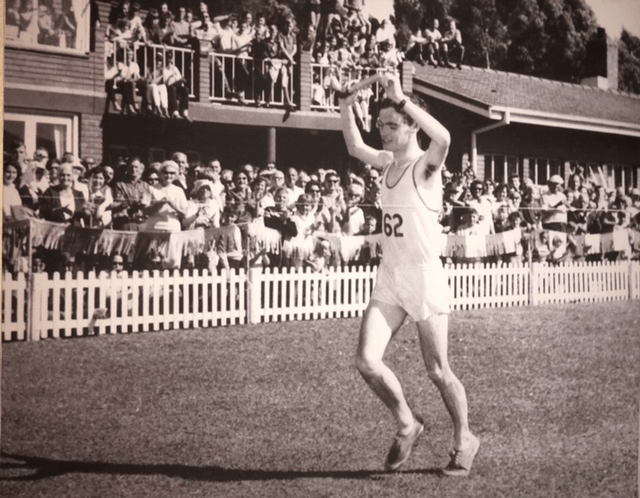
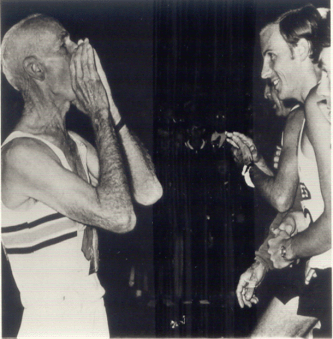
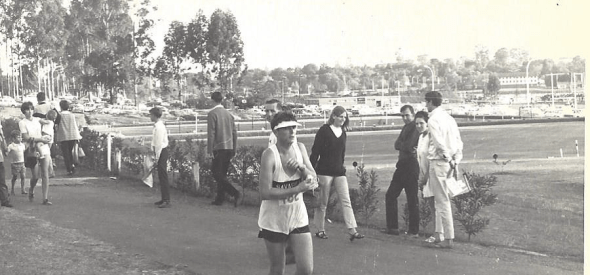
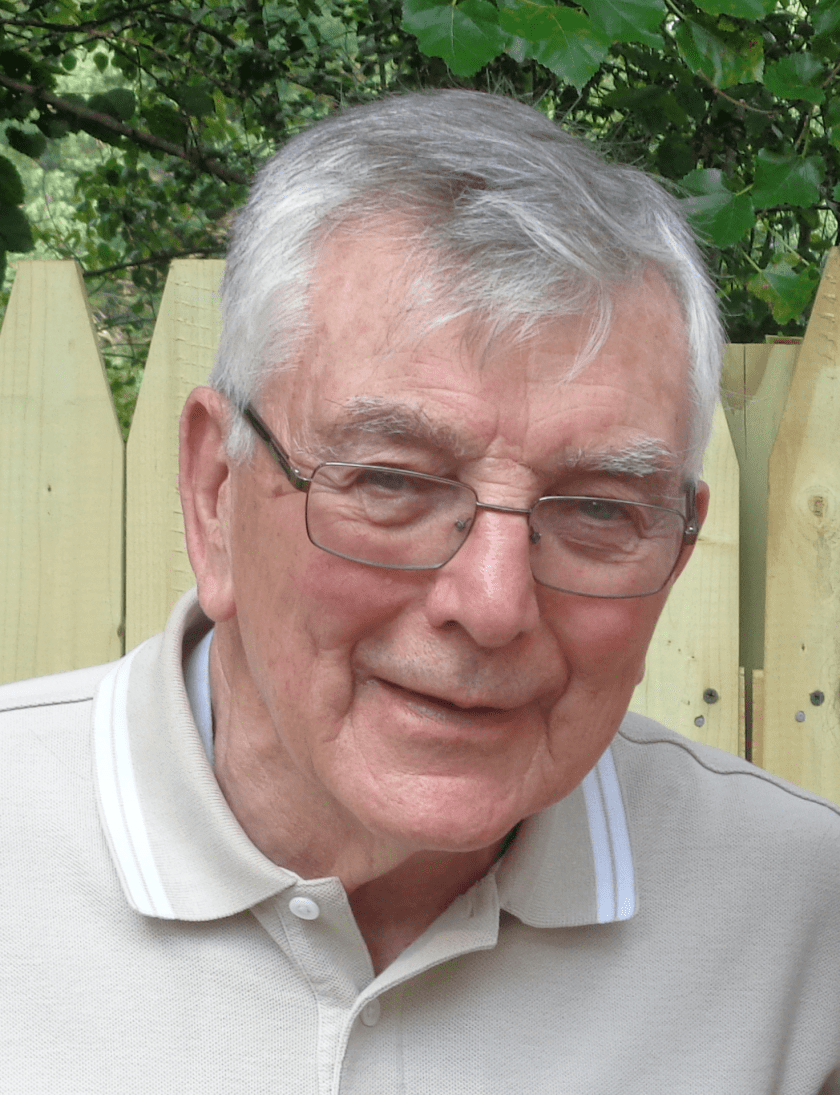
I have been privileged in the many years I have been associated with Comrades to have met most of the winners from the sixties, seventies, eighties (not difficult there with Bruce) and the nineties but missing from my list of winners I have met is 1965 winner, Bernard Gomersall who came home in record time in the wettest race in Comrades history.

Bernard is one of the elder statesmen of Comrades and is 84 on the 23rd of August which puts him second in line behind Jackie Mekler as the oldest surviving Comrades winner.

He was last in South Africa for Comrades in 2015 but one thing is certain is that when he is next here, I am going to move heaven and earth to meet him.

One man who does know Bernard very well, is my good friend, Tommy Malone who has raced against Bernard in the London to Brighton but never in Comrades and I asked Tommy if he would be good enough to contact Bernard and to get his story for me for themarathon.co

Tommy didn’t hesitate and for that I thank him.BERNARD GOMERSALL COMRADES CHAMPION 1965.docx

 Here’s Bernard’s story:

In my youth I was mad about sport, mainly football. I did try other games like cricket, rugby, tennis. I always wanted to be successful at some sport and the only thing that stopped me playing football for England was my lack of ability. I was useless but I didn’t know it.

I did very little running up to the age of 17. I had qualified as a soccer referee and joined the local athletic club, Harehills Harriers to help me with my fitness on the football field.

I joined in some of the events (mainly track and cross-country) but once again I was rubbish but one day going to a track event in Leeds, the tram I was travelling on was held-up to allow a road-race to pass. When I saw some of the runners go passed I thought that I could do better than that, so I joined the road section of the club and started to improve.

My first attempt at the marathon was in 1958 in Hull and I managed to do 2:44 for 6th place.

That same year Mike Kirkwood a friend of mine from Hull won the London-to-Brighton and thought that if he could win that race I was capable of running it. I had no thoughts then of ever winning the race.

In my first attempt at the Brighton in 1959 I set out to run about 7:25 for a 2nd class standard medal I managed to do 6:15 for a first class standard A medal.

It was a start.

I first heard about the Comrades in 1960 when a lad from Leeds, Dennis Stevenson, came to the club. He had lived in New Zealand and came back to Leeds via South Africa where he had run in the Comrades and finished 6th in 1958. He told me about the steep hills and the tremendous atmosphere generated by the roadside crowds. It sounded wonderful but I knew I would never ever get to see it – or so I thought.

When I was invited in October 1964 by the road-runners club to compete in the Comrades, I had a British winter to face. But this was no different to any other year. We had to train in these conditions if we wanted to have a successful summer. I trained in the cold morning and nights, before and after work, seven days a week. Long runs at the weekend and a fair amount of track work during the week.

It would not have been possible to achieve all of the results without the unselfish support of my dear wife Ruth who looked after me and our four year old daughter Bernadette. As all top marathon runners know it is the wife who makes you a top runner.

When I came to the Comrades in 1965 I must confess that I was very ignorant about any of my opponents.  I had run in the 1959 Brighton when Fritz Madel won and again in 1960 when Jackie Mekler won but I was just another runner and I never got to meet them. So I went into the race knowing very little about anybody.

The celebrations of the 1965 Comrades started at 10.30 pm the night before. I had just got into bed and was about to go to sleep when I was disturbed by a noise on my bedroom roof, It was RAIN and it lasted to the following evening after the race.

I was lulled to sleep by the sound of the rain-drops on the roof. I was further encouraged on race morning by the sight of Jackie Mekler sheltering near the Pietermaritzburg city hall with a look of complete misery on his face. Everybody was complaining about the cold. I asked “What Cold”?

During the race (after about twenty miles) I removed the light sweater I was wearing leaving just the white British vest which I found warm enough, I think this finished off the opposition.

I approached the race in ’65 just the same as in England because I had the same conditions. People accused me of bringing my own weather with me.  They thought it was unfair!!!  I think it still goes down as the wettest Comrades in history!gomersall comrades 1965

I was seconded by well known Comrades personality Derek Palframan who did a splendid job on the day

It may sound very “Big Headed” but on that day nobody would have beaten me. It was my day, thanks mainly to the weather. Also I felt has though I had “feathers in my shoes”.

I came back for the 1968 Comrades but that was a different story altogether. Due to some change in circumstances I was not able to devote as much time to my preparation for the race as I had in 1965.  Then, of course , there was the weather.

It was hot by my standards. I fried losing 17lbs during the race. I was well beaten on the day and finished in 7th place just outside the gold medals (there were just six in those days)GOMERSALL COMRADES 1968

I was not as happy at the finish that time and was assisted by race official Bob Calder.

The London to Brighton was my event. It held priority over everything else I did.

My preparation for the race started three weeks after the completion of the last one and I spent eleven months working for it. No other race was important and all my the thoughts were for the race in September. GOMERSALL BRIGHTON 3

My record of four consecutive wins has not been beaten. Bruce won three on the trot and a Steven Moore from London has won it four times but it took him ten years to do it.

When thinking of the toughest opponents in the Brighton, three names come to mind. The first was Ted Corbitt of New York. He was a great athlete and an even greater gentleman. In the 1964 race he chased me all the way to the finish and was only 58 seconds behind at the end.

The other two were in the 1966 race Manie Kuhn and your good self, Tommy.. Between you, you managed to scare me almost to death. I was so afraid of the two great athletes behind me. How I managed to stay in front that day I will never know. It was the best race I ever ran in.

GOMERSALL & KUHN IN BRIGHTON

This photo in the London to Brighton shows 1967 Comrades winner Manie Kuhn wearing race number 45 in our lead group.  Manie finished second that year. Over my right shoulder you can see John Tarrant who gained “fame” as the “ghost runner” when he came to South Africa to attempt to win Comrades and was not permitted to run officially by British athletics.

Although I had a very successful running career my best memories are of the many lifetime friends I made. I think that these a more precious than all the medals and trophies,

Today’s Comrades is so different to the event I took part in. It is so big. During my recent visits to the race I have been overwhelmed. I have enjoyed every minute. The three day expo, the meetings, the dinners but I don’t think I would like to be competing these days with so many runners, all the crush and the waiting at the start. It’s what each of us is used to and I always preferred small fields.

On 25th July 2014 I moved to the USA after living 82 years in the UK, to live with my daughter and it was the best decision I could have made. After losing my dear Ruth (we were married for 55 years) I was devastated. I was on my own with no relatives nearby. My daughter with her husband, Kevin, and two daughters Beverley and Theresa had moved back to the States in 2000. The two girls were born there in the late 80s. They were now firmly settled. She offered me a home which I eventually accepted. It took three years of paper work to obtain my entry visa, but I now have my green card and I have settled down nicely to life here.


September 2016

ROWYN JAMES – COMRADES RACE DIRECTOR :

One man who seems to have an endless supply of energy and is on the go non-stop is Comrades Race Director, Rowyn James and I managed to catch up with him on one of his flying visits to Johannesburg and sit him down long enough between sponsor meetings to find out a little about the man who drives Comrades and who is largely responsible for making it all come together every year. I started off by asking him when his relationship with Comrades had started.

Photo Rowyn James for souv mag

DJ:      A lot of people are under the impression that your relationship with Comrades started two years ago when you were appointed Race Director but that’s not right because it started way before that because you have run the race 15 times and have a green number. When did your love of this race start and how did it start?

RJ:      It started in 1984. My grandfather was caretaker of a building in Pietermaritzburg opposite the start and we used to gather there yearly to watch the start but I had actually started running fun runs in 1981 when my dad noted that I had an athletic talent at school athletic meets.  I eventually ran my first Comrades in 1987 and ran all 15 consecutively until 2002.   I have Green number 1024.


DJ:      Can you give me something that really stands out for you from your Comrades running days?

RJ:      Two things that will stay with me always. I was the second youngest person to ever get a green number (at age 28) because I was able to start at age 18 in those days and I was presented with my green number by Wally

Hayward.

rowyn and wally

DJ:      In terms of your work career you have a long history of being involved in the sports industry? Is that where you always wanted to be and was the job you have now always what you were aiming at as you travelled your career path?

RJ:      I was born and bred in Irene, attended Irene Primary School and then matriculated at St Albans College in Pretoria, then 2 years national service in Port Elizabeth and after that Standard Bank for a while. I then studied BA business admin at Pretoria University and then in 1994 worked for the late Andrew Greyling in his specialist running sports shop until 1997.  In January 1998 I joined Nike SA until December 2007 as Sports Marketing Manager with a specific focus on the road running category.

Then in January 2008 I was appointed as Race Director of Two Oceans in Cape Town and I held that position until May 2013. I then took a sabbatical after leaving Two Oceans and during December 2013 I was approached by Comrades to consider the position of Race Director of Comrades and I joined Comrades in March 2014.


DJ:      You have a wife and your job requires that you spend a fair amount of time away from home because of the demands of the modern Comrades. How do you manage to balance your time particularly in the first five months of the year leading to the race itself?

RJ:      My wife is a Grade 1 school teacher and all my jobs have required that I do a lot of travelling and I am very fortunate in that she is very understanding and supportive around that.


DJ:      As time passes various things have to change to make Comrades an attractive offering in the world ultra calendar.  I’m sure that people will smile and nod in approval but away from the meetings that decide the changes it’s a very different thing in many cases. Do you find that and how do you deal with it or do you just shrug it off.

RJ:      My career operates with two analogies – DTIP…. “Don’t take it personally” and ” “If you have a perfect event, you have a problem”.   Once something has had the approval of the deciding body or the board or committee then I simply adopt the attitude that it’s not something that I should allow to affect me personally. It’s a business decision and it’s been taken and if it is completely wrong it can always be changed or reversed if need be if it’s shown to have been the incorrect decision.

I want to ensure that the runner has a life changing experience with Comrades. It’s about the athlete and the event. I have been extremely fortunate to experience “both sides of the fence“ so to speak, so I know what the athlete requires and what they in turn experience on race day.

IMG_20160729_164044

DJ:      Do you watch and listen closely to what the runners are saying all the time to continually provide the best product to your customer – the runner.  If so an example?

RJ:      Yes always. I prefer to keep a low profile (it’s not about me) but will always mingle with the crowd and listen to what is being said. An example is the way we loaded the seeding batches this year came from somebody at a club meeting who came up with the suggestion of the way we do it at present and we listened and implemented it. We will always listen to good suggestions.


DJ:      You have a very good team but you are still very hands on with a lot of things and I think of even little things like distance marking of the roads as just one example where you get involved with the team.

RJ:       My work philosophies are TEAMWORK and attention to detail (ATD) but I work closely with the various portfolio teams and whilst I am very much steering the ship I am also supporting and involving myself with the crew and stepping off the ship last.  I find that the various teams appreciate the input, involvement and support whatever that might be.  I believe in getting stuck into the tasks and engine rooms with them.

 IMG_20160729_165304

DJ:      It must be a great feeling as happened this year, to get to the end of a race  and that there was no drug cheating and also to get the results through that the  race was clean as it was for the first 10 men and first 10 women and that generally there were no major problems.

RJ:     It is a great feeling and satisfying but by the same token it’s sad that we should have to celebrate something that should be normal.  In a perfect world there wouldn’t be cheating.


DJ:      The launch of Comrades 2017 is due in a couple of weeks. Are we in for any surprises of any sort?

RJ:      Yes, some exciting surprises, changes and innovations are coming but I’m not going to tell you what they are.   You’re going to have to wait until the launch on the 18th of August.  Change is ultimately what keeps the Comrades brand fresh and relevant.IMG-20160317-WA0011


DJ:      Any other innovations you would like to see coming in over the next few  years and any you can talk about?

RJ:      One I can tell you is that we’re moving the race date to the second Sunday in June from 2018 onwards because of the clash with the Royal show and problems with accommodation and essential support services in Pietermaritzburg.

Another thing we’re looking at in the future is the possibility is reducing the qualifying time back to 4:45 for a marathon. But that hasn’t been decided and confirmed yet. 


DJ:    Finally, it doesn’t take 9 years very long to pass and you just need to blink a       couple of times and those 9 years will have passed and 100th Comrades will be with us.  You may say you’re not but I’m sure that there is a little section inside your Race Director’s head that is already thinking about it.      Am I right?

RJ:    Yes you are. Still just a tiny blinking light in the distance.  Nothing definite but ideas running around and one thought is to see an entry of 30,000  runners but I don’t know if Pietermaritzburg could handle a finish of so many so thought needed there.

Remember too that any novice who finished this year and who carries on every year will be in line to earn their green number at the end of the 100th Comrades          

The other thing we have before that of course is the 100 year anniversary in 2021 since the first Comrades was run in 1921 so that’s going to be another special one.


One thing I can tell you is that it was fascinating sitting chatting to Rowyn and I was really sorry when our time was up as I could have spent hours more talking to him about this “thing” that is certainly my passion and which I have no doubt at all is also his passion and I have a pretty good idea that as long as he is around   my passion will be in good hands.

I’m really looking forward to the launch of Comrades 2017 that takes place on the 18th of August in Johannesburg and all being well I will be able to write a chapter on what will be happening at next year’s race for themarathon.co


29 July 2016

SHAUN MEIKLEJOHN – THE QUIET COMRADES HERO :

One of the things that I have found that Comrades winners have in common, is that they are humble and one of the those who best fits this profile has to be the man who won Comrades in 1995 and who stands in third place in terms of the number of Gold medals he has won with 10, and that alongside Jackie Mekler and just behind Alan Robb who has 12 and Bruce Fordyce who has 11.  Shaun Meiklejohn has 10 Gold medals and very few people know this because Shaun is so quiet and humble about his Comrades achievements and apart from saying that he won Comrades in 1995 he says very little else about his Comrades achievements.

I decided the time had come to find out more about this man so I asked him to tell me something about himself.2016-07-05-PHOTO

DJ:      Where are you from?

SM:     I was born in Pretoria, but I have lived in Durban where I did my pre- and primary schooling, Carletonville where I did my high schooling and I matriculated at Carlton Jones High School in Carletonville.

I went back to KZN to Pietermaritzburg to varsity then back to Carletonville after national service where I worked as an assistant accountant on Western Deep Levels Gold Mine and then back to Pmb where I currently live in Hilton.


DJ:      What attracted you to running?

SM:     It was only in 1981 when I went to university that I joined some of my fellow students who had run Comrades in 1980 with the intention of lining up with them that year. It was really just something to do in our spare time, no real attraction at that stage, it did work up a thirst and would we quench that with ice cold beers!

My first Comrades was in 1982. In 1981 I qualified with a 3:50 marathon at the old Richmond Marathon but was knocked off my motor bike going to lectures one morning so I watched from the side-lines. Bruce Fordyce (black armband) and Isavel Rosch-Kelly won that year. I was hooked after that and I didn’t even run!


DJ:      Did you have any other sporting interests as a child?

SM:     I was a really keen soccer player and even got Western Transvaal colours U16. I started playing golf in my last couple of years at high school and got my handicap down to 5 at one point. I also enjoyed playing squash & hockey up until I left school.


DJ:      What are you by profession?

SM:     Financial Director at Innovative Shared Services


DJ:      Do you have any hobbies or sporting interests other than running?

SM:     I still manage to squeeze in a round of golf, no official handicap, but on a good day I’m an honest 14. I also love to watch the Sharks and Bokke performing at their best, which seems to be a struggle these days.


DJ:      People remember you first for your Comrades win in 1995 but I remember you quite a while before that when you suddenly burst on the scene in the colours of Carlton Harriers and you had everyone in quite a stir because of how much they thought you looked like Bruce Fordyce.

SM:     Folk first took notice in 1989 when I had moved back to Carletonville and trained properly after finishing 17th in 1988 running out of Queenstown, I had set a top 10 as my goal and led the race until the top of Cowies Hill, Sam Shabalala won that year and I finished 5th. Bruce was in the commentary team that year having won the Standard Bank 100km earlier in the year in Stellenbosch. There was a bit of chirping in the studio if I remember correctly…. I must have looked like a younger version of Bruce back then, ha ha …


DJ:      You had been in gold before your win in 1995 but to eventually cross that line to win must have felt amazing! Is it possible to put it into words?

46

SM:     I had 5 golds at that point and even a 2nd place to Nick Bester in 1991. In 1995 I decided to run “full-time” from January and put all my eggs in the Comrades basket. It paid off, I was so confident in my build up and mental preparation that I asked Julie, my wife, at the start if “I looked like a winner”! The race was amazing, I felt in control all the way, running my own race and not panicking when Charl took off after Cowies Hill. I passed him going up Tollgate and opening a 1 minute lead by the finish, I was on such a “high” running into the stadium realising what I had achieved.


DJ:      Your Comrades performances are quite remarkable. In 28 runs you haven’t gone slower than 7 hours have you?

SM:     I have twice. In 1982 I did 7:17 and 2003 I was 7:15, all the rest under 7 hours


DJ:      Your 28 years at Comrades haven’t been in succession and you took a break. Do you think that made a difference and allowed the “old” legs to recover slightly?

SM:     I took 6 years off after 2003, feeling physically and mentally stale and running the last few with niggles. The break allowed my body to heal without a doubt but I had put on around 15kgs so it was a struggle to get running again, it was only after I embarked on a proper eating plan eliminating wheat, dairy, sugar and alcohol, did I shed the weight and I was back in 2010 with a 6:45 …

Finish1

DJ:      Do you intend carrying on running Comrades and getting up to 40 Comrades and beyond? Only one other winner has run 40 Comrades and that’s Alan Robb.

SM:     I don’t think so, at this stage I’m taking one year at a time, enjoying my running, if my body allows then 30 seems like a good time to reassess.

 Finish5

DJ:      How have you managed to balance your running with your business life and family life so successfully?

SM:     It is all about finding the balance, which may mean running at 4:00am so I can get kids to school on time and also making a few sacrifices along the way, in the really competitive days our social life would take a back seat, fortunately I have a really supportive wife and kids that understand my passion for running, even now in my “Master” years.

DJ:      You finished 4th in the 100Km world champs in Japan in 1994. A great performance. Did you find that very different from something like Comrades. A lot of people say that the 100Km is a completely different thing and interesting that it was the year before you won Comrades. Then in 1995 you did the same thing again.

SM:     I was really keen to attempt the 100km distance, I just felt that that little extra distance may suit me. I ran Two Oceans that year in 3:21 so was in good shape, finishing in 6:26 and missing Bruce Fordyce’s SA 100Km record by about a minute. The 100km is not too different from Comrades, the hills in Comrades make up for the slightly shorter distance so if you can handle that you can deal with anything that a 100km event can throw at you, just the support in the form of spectators and drinks is very poor at those other events so you really need to be mentally tough!


DJ:      Then in 1994 you won the London to Brighton. So the mid 90’s were good to you.

SM:     I felt that I needed a confidence booster going into the 1995 Comrades so I chose London to Brighton, I had a good 100km under the belt and South Africans have a good track record at the event. It was tough, again little or no support and a hill called “Ditchlings Beacon”, the equivalent of Polly Shortts to greet you around 80km into the race.


DJ:      For the last 4 years you have won the Master’s category and this year second by something like 42 seconds. What is it that enables you to just keep going year after year and is this still a target?

SM:     It’s the competitive spirit I guess, I try to get the best out of myself on the day, if its good enough to be first that a bonus, it gets tougher every year now as I reach the mid-fifties!


DJ:      Finally, your focus at Comrades now seems to be much more on charities. Tell us about that.

SM:     I would love to do more; there are so many kids that, due to circumstances beyond their control, land up getting involved in activities that get themselves into trouble. Running, in fact sport in general is a great way for them to lead a fit & healthy lifestyle and for those with talent to reach greater heights in terms of personal achievement. I work together with my running club, Save Orion AC, on various projects within local communities to assist those in need.


If you would like to look at the blog with all the details of Shaun’s charities you’ll find it at  Meiklejohn.co  so go and have a look at the work he’s doing and give him your support.

28 Comrades to his credit, 10 Gold medals and all the rest silver and only two slower than 7 hours. That’s not too shabby a record. Shaun we salute you!

July 2016
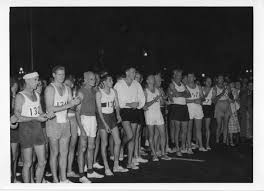
 

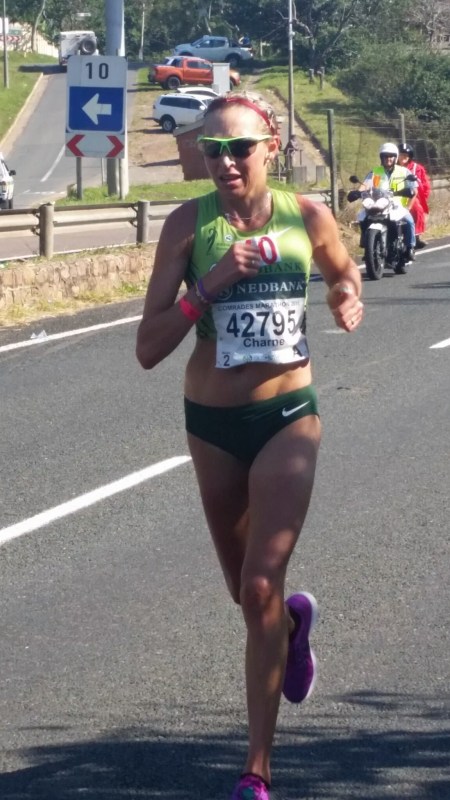
CHARNE BOSMAN – COMRADES 2016 WOMEN’S CHAMPION :

I hadn’t met Charne Bosman before she won Comrades 2016 but I contacted her nonetheless and asked her whether we could meet for a cup of coffee and a chat for a chapter of The Marathon and she readily agreed.
 When we met I found a charming, down to earth very friendly young lady bubbling over with excitement at what she had achieved just a week before, and why not? She had won the women’s race in the world’s Ultimate Human Race, The Comrades Marathon, and only 23 other women have done that before her since women were first allowed to compete officially in Comrades in 1975 – 41 years ago.

  IMG-20160602-WA0003

I started off by asking her if she had always been a Pretoria girl. 

CB:     No, I was born in Malmesbury and when I was still quite young we moved to East London and then when I was 16 the family moved to Pretoria and I have been here ever since. I currently live in Centurion.


DJ:      So when did the athletics bug bite? 

CB:     Shortly after we moved to Pretoria I started running with my niece (a provincial runner) and then I developed an interest in track running with a focus on 1500m and 3000m and especially in Cross country and within 6 months of moving to Pretoria I had my Provincial colours for Cross country and it just carried on from there between track and cross country and shorter road races up to 10Km.


DJ:   Throughout your career you seem to have slowly moved the distances up as you have got older without trying to do shorter distance racing at too old an age.

Is that a fair comment? So when did you get National colours for the first time and how many times have you had National colours?


CB:   That is what I have done. I always thought that there was no point in trying to compete against people much younger when you are no longer able to do so, so I moved my distances up as I got older to half marathon then marathon and eventually to ultra but ultra wasn’t actually planned at the time. I first got National colours for Road relay at the age of 20 and I have been fortunate to have had National colours 23 times.


DJ: When you say that your move to ultra running wasn’t really planned at the time, what do you mean by that and when was it?

CB:     I moved to Ultra running when I was 37.     I desperately wanted to make the   South African team for the Olympics in 2012 for the marathon but narrowly missed it.   I was very down in the dumps about that and very nearly gave up athletics altogether thinking that there was nothing left and it was my husband, Carel who suggested that I should think about a move to Ultra distance so in 2013 I went to Two Oceans and did my first Ultra and was pleasantly surprised to find myself finishing in second place.

IMG-20160609-WA0006

I then decided that Comrades was worth a “go” so I entered and finished in 5th place in 2013.   I actually came onto the track in 4th and lost 4th place on the track and finished in 5th.   2014 I came back to Comrades and didn’t finish because of ill health and then last year in 2015 I managed a second place to Caroline and so my ultra career had started.

I still run shorter races but I don’t take them seriously at all. If I happen to do well in them it is pure bonus. For example I won the Johnson Crane at the beginning of the year but the time was slow as I wasn’t going out to race hard.    I ran Two Oceans this year but didn’t feel great on the day and ended up in 4th place. 4min behind the leader.


DJ:      One thing I don’t understand and perhaps you can explain. There are two of you who are top runners.  You and Caroline.        You have the same coach in Lindsey Parry yet your strategy towards races in the 5 months before Comrades differs significantly. Who decides that strategy?

CB:    We jointly do. We obviously discuss our ideas with Lindsey and listen to what he thinks. We will then go to the race with a very specific plan that we try to execute the best we can.     lindsey and charne

We will sometimes race against one another in build-up races as we both stay in Pretoria.


DJ:      In early April you had a mishap at home when you slipped and broke your little toe.  It must have been very sore but you said nothing and I’m sure that Lindsey knew about it but he also said nothing so the media knew nothing about it either. Tell me about that.

 CB:     It was very sore and my foot was swollen a day or two after it happened to the point where I couldn’t get a shoe on. I knew that if I didn’t do something that Comrades was gone as I was going to be out too long whilst my toe healed so I did what everyone does. I went and asked Dr Google!

 I found out about HYPERBARIC OXYGEN THERAPY (suggest you Google it if you’re interested) and with the treatments I had I ended I up being out for only two weeks. I broke my toe on the 8th of April and I was back on the road on the 24th. I was very fortunate.


DJ:      And the toe didn’t bother you at all on Comrades day?

CB:     Nothing.

IMG_20160604_113803

DJ:      Now that we’ve mentioned Comrades Day, tell me about your day.

CB:     My day was good. Everything went according to plan and I was happy and content to sit where I was and I came into Durban happy to be in second place and I had no idea at all that Caroline was in trouble until I saw the lights of the lead vehicles in front of me and getting closer all the time and then I started wondering what was happening. When I eventually saw her I couldn’t actually believe it and I caught her and passed her but I didn’t say anything at all to her and at the back of my mind I realised that perhaps I could win this thing but also that Caroline is very strong and could come back at me and then there was the memory of being passed on the track to lose 4th place two years ago so all these emotions were going on.

DJ:      Eventually the emotions must have been replaced by reality that you were going to win when you came in sight of the finish tape.  Are you able to explain what it felt like?

 CB:     Amazing! Just amazing! I crossed the line and one of the first people to get to me was Nick Bester the Manager of the Nedbank team and the first thing he said to me was “Are you crying?”. And I replied simply “Yes”.

IMGP0169

DJ:      So now what happens? Comrades is over but everybody wants a piece of you for interviews and I’m sure you are not back on the road yet.

CB:     No, I’m not.   A rest for a week or two and then short races and quality stuff to the end of the year  and then come January we start concentrating on building the quality longer runs and looking ahead to what I’m going to be doing until the 4th of June next year.IMGP0226


And there you have it. The story of a young lady who has come a very long way and travelled many kilometres to get to that finish line of Comrades – The Ultimate Human Race, ahead of the rest of the women in the field on the day of the race.

We wish you well Charne. You certainly deserve it!


 6 JUNE 2016

AMIT B. SHETH – COMRADES THE INSPIRATION

One of the amazing things that I have discovered about doing what I do as far as Comrades is concerned is that that I have made some amazing new friends and some of them I have never even met.

One such person is Amit B Sheth who travels from India every year to run Comrades and who has a blog which is worth reading and which you’ll find at amitdaretorun.blogspot.com

He also wrote a book which has been a best seller in India and which is available on Kindle entitled “Dare to Run” about his early Comrades story.


Here is Amit’s story about Comrades 2016.


AMIT B SHETH – A DAY OF DAYS

 AMIT SHETH

So on the 29th of May, as I lay in bed at night, sore and in pain, I wrote about my Comrades 2016 experience.  I wrote it and went to sleep. Later the next day I posted it on Facebook and sent it to my close friends.

What I had written about was primarily the post Comrades experience where I shivered due to cold IV drip in the medical tent Getting nausea, cramps, dehydration, aches and pains are all part of running Comrades. At Comrades these aches and pains are taken to an extreme.  

But sometimes to someone who isn’t into running this all sound pretty awful.   It seems to them, like it was a traumatic awful experience.  

A non-runner who enters the Comrades medical tent for the first time could be appalled.    He will think that some natural disaster has stuck and something terrible is going on.

On reading my post, someone from India, asked me, “Was this your first finish and will you come back again because you had such an awful day?”

I’m not sure which part of my post led him to the conclusion that I had an awful day.   After all, I have in the past failed to finish Comrades and not thought of that as having an awful day and here I was at the end of the day with my 5th Comrades medal around my neck. 

What part of that looked like awful? It wasn’t an awful day at all.    It was just how Comrades day is.

The winner of last year’s Comrades had cramps and was limping much like me.  She was in pain and at some point staggering on the road.  I know she will not describe her day as awful.

Two years ago the indomitable Russian twins crossed the finish line and collapsed on the green.  They landed up taking some IV.  I know they won’t describe that day as awful.

Comrades is hard for me and I guess it is for most people. It is hard for those who win and it is hard for those who don’t. So it was a day just like a Comrades day is supposed to be. 

And yes, for me, it was excruciatingly hard and I had to dig and dig and dig inside me to find strength to keep moving forward.
I managed.

  AMIT SHETH RUNNING

I think if I can live my life, pushing ahead, one small step at a time, relentlessly, mine will be a well lived life. 

I was in the field.  I was struggling and fighting the clock. I was so completely alive to the passage of time.

There were times when I saw the hill rise in front of me and it made my heart sink.  I wondered, “How in the world would I be able to soldier up that hill? How much time will I lose going up that monster?”

My legs didn’t have the strength to run up those hills so I decided that I won’t look in the distance. I lowered my cap and kept my eyes just 5 meters in front of me. 

I looked at the legs of people in front and if they were running I ran. If they were walking, I passed them and tried to find feet which were running and followed those instead.

Did I have an awful day?

No!!! On the contrary.

What more can one ask for in life other than to be part of the world’s greatest gathering of crazy people?

And come to think of it, one can ask, “Who is crazy and who is normal ? ” I’ve come to the conclusion that the more times you run Comrades, the more normal you are. 

The more times you fight your limitations in life (whatever they may be) the more normal you are. I cannot imagine life without having had this experience. 

When I’m dying and if I get the time to look back at my life, I will think with great fondness upon these days. I will look back and know that I was privileged to be on that road and in the company of my heroes and heroines.   

It makes my life, a well lived life.

It wasn’t an awful day. 

It was a Day of Days 

COMRADES MARATHON HOUSE

There can’t be very many runners of Comrades who don’t know about Comrades House, but what exactly is Comrades House and how did it come about? I certainly didn’t know enough about it to write about its beginnings so I turned to one of my good friends on the CMA Heritage and Traditions committee and also who is the Convenor of the International Bus Tour portfolio, Brian Swart, to go and do a bit of research into how it all came about and to put it all down so that anybody visiting Comrades House would know the story of this magnificent old building.

My thanks to CMA for the information given for this article and for the photo of Comrades House which is reproduced in this article. My thanks too, to Brian Swart to the time he spent writing the article which follows.


FROM SMALL BEGINNINGS

THE HISTORY OF COMRADES MARATHON HOUSE

by

Brian Swart

Once upon a time, there was a patch of open grassland and trees where a kaleidoscope of creatures frolicked in the sun.

It was little more than a staging post… way, way out in the country… a distant two kilometres from the heart of the city… a place of comfort, in out-of-the-way Maritzburg, where tired travellers rested their weary bodies, and exhausted horses, as they made their way to and from the bustling cities of Durban and Johannesburg.

Today… …

It is the home of the Comrades Marathon Museum… a truly Grand Old Edwardian building…. standing tall and proud above the surrounding buildings. It is a fitting tribute to the biggest, and greatest, ultra-distance road race in the world.

Number 18, Connaught Road, Pietermaritzburg.


It was a nondescript, undeveloped stopover point, inhabited solely by wild animals and visited occasionally by commuters in ox wagons in days when travel was possible only along wagon tracks cut through the undergrowth. Later, during the 1860s, they would traverse the bumpy, dusty, dirt road in the luxury of modern, fast stagecoaches until near the turn of the century. It is a by-gone era when pioneer travellers would have sought, and expected, nothing more than a suitable place to unhitch their wagons and draft animals in the wild, indigenous bush. The first building to be erected on the property was still more than forty years away.

The first owner was a Dr W. O’Brien who, in 1903, paid the astronomical sum of £200 for the two-acre tract of virgin land. It is not known when the first building was erected on the property, except that it was built by Michael Henry Guttridge. A fire in the Pietermaritzburg Estates Department, in 1921, ensured that the many early developmental details of the property were, forever, to remain a mystery.

The first eighty years of the 1900s saw numerous changes in ownership, and major building extensions, until the Grand Old Edwardian, that had emerged, was acquired by the Comrades Marathon Association on 4 June, 1986.

The story of the Comrades Marathon House, however, had its roots firmly secured in the fabric of South Africa’s sporting culture, many years earlier. During the late 50s, the 60s and early 70s, the Comrades Marathon was a simple, unsophisticated club event, organised by a handful of members of Collegians’ Harriers Athletic Club in Pietermaritzburg. As the world-wide running boom gathered momentum during the ensuing two decades, the parallel interest in the Race dictated that the acquisition of additional organisational skills were inevitable, to mark time with the phenomenal growth of the Race which led, ultimately, to the formation of the Comrades Marathon Association in 1982.

As the growth continued unabated, it became mandatory that dedicated premises would be required for both storage purposes and the burgeoning administrative duties. In 1985, the Comrades Marathon Association established its headquarters in a large, but basic, storeroom above a supermarket in Alexandra Road. However, in a very short while, it became apparent that those premises would soon prove to be inadequate.

And so… the search commenced.

Two buildings in Pietermaritzburg were evaluated and considered and, for valid reasons, rejected. These decisions have, in retrospect, proven to be both fortuitous and correct in every respect. The one property was in Loop Street (now Jabu Ndlovu Street); the other in Pietermaritz Street. The rampant expansion, in recent years, of the inner city area, and surrounds, would have rendered either venue completely unsuitable, and untenable, for the administration, and survival, of the Comrades Marathon. The search, however, continued and then, in the peaceful residential suburb of Scotsville… Number 18, Connaught Road was discovered.

It was old and dilapidated but, beneath an unsightly veneer, stunningly beautiful. The graceful old house was in need of major reconstruction and refurbishment but its potential was, clearly, unsurpassed.

The Committee was convened. The advantages and disadvantages, the financial aspect and all possible scenarios, were considered and inevitably… a bold step was taken.

An architect was commissioned, designs were accepted, plans were passed and the redevelopment project gradually took shape until, finally, the Comrades Marathon had its own home when, on Wednesday, 16 March, 1988, the Comrades Marathon House and Museum was officially opened.

The task that faced the team undertaking the redevelopment project was all of daunting, enormous and, above all, challenging. The exercise was, essentially, one of blending the ‘olde’ with the new, which was where the three aspects of the ambitious plan revealed themselves.

 The outcome of the 1921 fire meant that the exact age of the building was not known and, at an estimate, must have been in the vicinity of seventy-five to eighty years old when acquired by the Comrades Marathon Association. Over such a long period, numerous extensions to the original building had been carried out, at different times and with building materials that were concurrent with the era in which the extensions were effected, creating the ‘unsightly veneer’ that was apparent at the time the initial inspection of the property was undertaken.

The main shell of the building, whenever it was erected, was built with beautiful old ‘Maritzburg Reds’; bricks, made from local rich, red clay, with which many historic buildings in the city are built.

When the work commenced, walls subsequently built with newer, darker bricks had to be demolished. Steel window frames, that had replaced the original sash windows, were removed. Concrete beams, that had replaced original carved wooden beams, were broken down and the dilemma facing the architect was where to locate ‘olde’ materials to restore the building to its former glory.

The ingenuity of the team came to the fore when sufficient quantities of Maritzburg Reds and discarded sash window frames were located during visits to scattered demolition sites, builder’s supplies merchants and numerous other, similarly, obscure sources, over an extended period.

After many months of toil, patience and, at times, moments of true genius, the culmination of a dream was unveiled; a majestic monument to the Comrades Marathon of which both the Comrades Marathon Association and the City can be, justly, proud.

Outstanding craftsmanship and the exquisite, aesthetic beauty of its red clay brickwork, blended to create an architectural tapestry that led to the house, justifiably, being listed as a National Monument.

Initially, the refurbished building housed both the administration office, on the top floor, and the museum at ground level. Despite the substantial increase in available floor area of the new premises, the inevitable, once again, slowly and assuredly, reared its unwanted head; more space would be required. In time, the two houses, adjacent to the original house, were acquired for administration purposes, leaving the main Comrades Marathon House, exclusively, as the home of the Comrades Marathon Museum.

Inexorably, time marches on and, as it does, it demands that progress marches alongside it. The new millennium has made its presence felt. Man has to move in concert with it and the Comrades Marathon cannot afford to be left trailing in its wake. It must walk boldly into the future and, as an initial step in that direction, the Grand Old Edwardian, and the Museum, is undergoing extensive renovations that will ensure that it takes its rightful place, amongst the finest, in the hi-tech world of the twenty-first century.

Once upon a time, there was a patch of open grassland and trees where a kaleidoscope of creatures frolicked in the sun.

There was just a rickety, little old farmhouse standing there… where travellers unhitched their wagons, locked their oxen and horses in the stables and slept peacefully overnight, while the stars kept a silent vigil above.

Today… …

In that same place, we can gaze with pride and awe upon the grandeur of the… Comrades Marathon House.


TOMMY MALONE – THE FLYING SCOT :

Tommy Malone was a young man when he came to South Africa in 1962 and he answered the call of the Comrades Marathon four years later. He wasn’t really known beyond the running world in what was then the Transvaal and a few runners in Natal but it wasn’t very long before the diminutive runner from Coatbridge between Glasgow and Stirling in Scotland soon became known as the “Flying Scot”.

It’s 50 years ago exactly since Tommy Malone won his Comrades Marathon as a novice so what better time than to chat to Tommy about that day on the 31st of May 1966 and the lead up to it.

DJ:      When did you first start running and what was it that attracted you to Comrades? 

TM:     When I was 16 I started all disciplines in school and I developed a liking for cross country. I came to South Africa in 1962 and in the 1963/64 cross country season won 13 from 15 events at inter club events and then made South African team in 1964 and ran against then Rhodesia in Bulawayo.

I read everything possible about running and eventually started following Jackie Mekler’s career after his second place to Scotland’s Joe McGhee in the 1954 Empire Games Marathon. I had been in touch by letter with Joe McGhee while I was still in Scotland but when I came to South Africa I decided to try to get in touch with Jackie Mekler which I did and I met up with him and I have been friends with Jackie ever since, over 50 years now. Obviously with my interest in Jackie’s career and then getting to know him and getting into road running Comrades was always going to follow, and it did.


DJ:      Despite a fair degree of success in races in the 5 months leading up to Comrades 1966 starting with the Magic Trophy in Pietermaritzburg you were relatively unknown to the general public prior to Comrades 1966 where you came in as a novice. Tell us about your race successes in the first half of that year.

TM:     I went down to Pietermaritzburg in January for the Magic Trophy which was a very tough 32Km and I won that and after the race Manie Kuhn came up to me and introduced himself and said that he had heard through the grapevine that I was thinking of running Comrades and that if that was true he had a friend in Johannesburg who would be happy to come round and break my legs. That was the start of a lifelong friendship with Manie despite many fierce battles on the road. He was a good man and I still miss the many laughs we shared whenever we got together.

In 1966 and prior to Comrades,  I also ran the SA Marathon Champs in Bloemfontein and despite not being 100% well I managed to finish in third place there. And then six weeks before Comrades I ran in, and won the Korkie that used to be run from Centurion to Germiston and in that race I broke Jackie Mekler’s record.


DJ:      Apart from the races what sort of training did you do and did you turn to anyone for advice on Comrades 

TM:     I logged 6 months from 1 Dec and did 3200kms as Comrades training in that period including races. I ran 7 days a week and sometimes twice a day. My long training runs were 30Km, 56Km and one 64Km and a lot of it alone. I did do a few runs with 1957 winner Mercer Davies. One strange thing though was that despite my very long friendship with him I never ran any training runs with Jackie nor went to him for race advice that I can remember.


DJ:      The field was small in those days – probably not much bigger than around 500. What was your strategy from the start?

TM:     I approached it with caution. I had no pre race strategy and decided to rely on how I felt on the day. I was acutely aware of the fact that I was the novice and that I was surrounded by experienced Comrades runners and at a function the day before the race, one of the pre race favourites, Frikkie Steyn made no secret of the fact that he was going to win in 1966. He actually never won Comrades although he was a Gold medallist. I was also very aware of Manie Kuhn and his Comrades credentials and the fact that these guys all knew the route well and trained on it so I decided that I would go out in a group with them.


DJ:      You ended up with a very big gap between you and second placed Manie Kuhn at the finish – some 18 minutes. When did you start to make your move and when did you realise that the race was yours?

TM:     At around Bothas Hill, I was around 5th about 2 minutes off the pace and saw Jackie Mekler who was standing at the side of the road and said “Keep it going Tommy the race is still young”. I could never in my wildest dreams imagine that the man who had finished second to Joe McGhee at the Empire Games in 1954 and at that stage four time winner of Comrades (he would still go on to win it again) would be standing at the side of the road encouraging me.  

At Harrison Flats my second said to me “Do you want anything”? and my reply was “I want Manie Kuhn”. Manie had at that stage led the entire way and I had made my way up to 2nd place.

By the time we reached Camperdown I had caught him. I didn’t bother to slow down or to say anything to him as I passed him and there was no exchange of any sort between us. I eventually reached the downhill section towards the Tumble Inn and a spectator on a motorcycle came up alongside and my second asked him where Kuhn was and we were told that he was about 4Km behind. That meant that in some 12Km I had moved 4Km ahead and I hadn’t increased my pace so Manie was in trouble. 

DJ:      It must have been fairly lonely running out there – particularly with the size field and being an up run with few spectators until you actually got into Pietermaritzburg. 

TM:     Not through the towns. There were lots of spectators there but between towns very little in the way of people. There was one amusing incident that happened although it wasn’t very amusing at the time. I was running up Polly’s and as I didn’t want to run on the camber of the road I moved to the centre of the road and anybody who has run Comrades will know that the camber on Polly’s is severe, when an over enthusiastic marshall came rushing up to me, finger wagging and told me that if I didn’t move to the edge of the road and run facing the traffic he would immediately disqualify me!

I immediately moved to the side of the road and when I got to the top of Polly’s I was met by two motorcycle traffic policemen from Pietermaritzburg who then escorted me whilst I ran – in the middle of the road – to the finish!

I ran into the finish some 18 minutes ahead of Manie Kuhn in second place and that is still the second biggest winning margin in the last 50 years and the biggest on the up run in the last 50 years.

A PHOTO OF TOMMY’S WINNING “TAKKIES” WHICH HAVE BEEN BRONZED WHICH HE WORE IN HIS 1966 COMRADES

DJ:      You had two competitive Comrades and then you didn’t run Comrades for some four years before coming back to complete your remaining 8 Comrades for your Green number. Whilst you ran all of those in silvers what many people don’t know is that it was injury that took you out of competitive running.

TM:     Sadly yes. Both my Achilles Tendons gave in after the 1967 Comrades and I couldn’t run Comrades again for 4 years and then when I did come back it was a case of hobble more than run the way I used to run but I have still been involved with running in many ways since then.


DJ:      Looking back over those 50 years since your win in 1966, you must have seen massive changes to Comrades. You come back virtually every year.  The attraction is obviously still huge to be at Comrades.

TM:     I’m coming up for my 50th Comrades that I’ll be attending this year and it’s the meeting up with old mates and seeing people like Jackie Mekler and Mick Winn and others and swapping Comrades “war stories” from years gone by is really great and that’s what’ll keep me going for as long as I’m able to do so.


There are always less published stories about Comrades and the one from Tommy’s Comrades win is fantastic.

Sitting in faraway Scotland, his Mum, Elizabeth, was biting her nails wanting to know what was happening to Tommy in this road race at the southern tip of Africa and she had an idea. She picked up the phone and called the Glasgow Herald and got through to the Sports Desk. The call we’re told went like this.

“I wonder if you could help me please. My son was running this race in South Africa today…………

(interruption)

You must be Mrs Malone! Tommy won the Comrades Marathon today”.


NICK BESTER – RUNNER TO MANAGER SUPREME :

There can’t be very many people either inside the running world or even outside of it who don’t know the name Nick Bester. It seems Nick has been around forever and those with a good memory will remember that Nick won Comrades in 1991 on the down run but he was always there or there about and has a total of 9 Gold medals to his credit and a 6 further silvers. Then on top of that you will find his name on the Gunga Din team trophy several times. Gunga Din of course the team trophy for the winning team at Comrades.

I was able to pin Nick down between flights during his busy schedule to have a chat to him about the man and his life both as a runner and a manager.

DJ:      It seems that you have been around the running world forever but you were in fact a late starter and almost mid twenties when you started.

NB:     I was 24 when I started running and I started running to try to get fitter for rugby because my dream was to play rugby for the Springboks but after my first race where I finished 6th out a big field of finishers I realised that I had the ability to run and that’s how it all started.


DJ:      Over the years you have taken part in various different disciplines and you have won in various different disciplines but you always seem to come back to road running. Is that where your heart lies?

NB:     No, not really. I come back to road running because that’s where I’m needed but my heart lies in multi discipline sports like triathlon, biathlon and that sort of thing. I love those events.

DJ:      You have one Comrades win to your credit but I think it should have been more. You have three second places but the one that I really think that got away from you was 1994 when you were much, much stronger than Alberto Salazar towards the finish and catching him. Was that your closest?

NB:     I think my best was actually the 1997 race that Charl Matteus won. He passed me to take the lead after Tollgate with a couple of Kms to go. I ended up just a couple of minutes behind him at the finish and that’s the race that I think I should have won but it just went wrong for me. The 1994 race with Salazar was a good one but I left it too late before I made my move and it was my heart rate monitor that threw me out but without doubt it was 1997 that was the one that got away from me.

DJ:      What you are doing now is very different from actual running. Are you enjoying yourself?

NB:     I am enjoying myself. I get the opportunity of meeting with athletes, sponsors and administrators and get to see the sport from every angle so it’s interesting and I’m involved with development and that’s very rewarding as it is when our club athletes come through to fill top positions in races and especially major races. I’m also meeting some very good people but at the same time I am still training as I can’t imagine life without being out there working out.


DJ:      How do you respond to your critics who say that a lot of your runners in some major races like Comrades for example are not South Africans and shouldn’t actually be competing in the colours of your club and that you recruit them purely for the glory and the money? I have even had a suggestion that the Gunga Din trophy for the winning team in Comrades should be scrapped.

NB:     Athletes are free to run for any club they want to run for and from our point of view the more exposure a sponsor can get from athletes performing well whether they are South African or international, the better it is for the athletes who belong to that club, and I’m talking here specifically about the South African athletes because then the sponsor is encouraged to continue supporting the sport in terms of sponsorship which then benefits the athlete and it enables us to put more into the club for the members of that club and for the athletes who belong to that club. So the international athletes who run for our club and highlight our club at the big events are actually like our “advertising department” to benefit our local athletes.

As far as things like the Gunga Din are concerned, I can’t imagine Comrades without Gunga Din but in any event, those team competitions are only open to South African resident runners so if an international runner in our club colours were to win Comrades he wouldn’t count towards the Gunga Din if he wasn’t resident in South Africa so those arguments don’t actually apply anyway.


DJ:      Almost every day we are seeing a higher and higher level of professionalism coming into the sport in South Africa and I think this is simply following world trends but where do see the future of road running. Do you think that there is place for the professional and the amateur to be running in the same events and by the same rules?

NB:     This has been happening for quite a long time now and there is now reason why it shouldn’t continue happening. As long as the race organisers are catering for both the professional and the amateur runners as they are doing at present I don’t see any problem. This is what is happening internationally so no reason at all why it shouldn’t be happening here.


DJ:      Where to for Nick Bester in the next 5 or 10 years? Do you see yourself growing and leading the era of professionalism in road running and where would you like to see it in the future?

NB:     I think that road running in South Africa is very healthy right now and you can see this by how fast entries for races are filling for pre entry races and I would like to think that I have played a part in that and would like to continue to do that provided that politics doesn’t get involved in road running because if that happens it’ll signal big problems for the sport as it has for other sports in this country and even for some events where politics has become involved. When or if, that happens then I call it a day.


I honestly don’t think I could finish off this chapter on Nick without recounting a personal story that happened after his win in 1991. I had finished my reporting on the race for 702 Talk Radio and was asked by the producer of the Saturday evening Sports Talk show on Radio 702 if I could line Nick up for an interview with John Robbie. I tracked Nick down and he said it would be no problem at all and told me where he was staying – and in those days the winners simply didn’t do that.

I said I would get the studio to call him and he would be first up on the show and all was arranged. At about 5:45pm I had a call from the studio to say that Nick had checked out of his hotel that morning and had I any idea where he was for the interview? I didn’t have a clue as I thought he’d be at his hotel.

6pm and my phone rang again and it was again the studio asking if I had managed to find him because this was our lead story for the show and they had been running a promo for the interview all afternoon. I had no idea where he was.

At about 6:05pm the phone in my hotel room rang and it was Nick. He had indeed checked out of his hotel that morning and decided to travel home to Pretoria, all the while remembering his promise to me and he had eventually reached Harrismith and had found a steakhouse, gone in and explained to the manager what the problem was and had called me from the manager’s office in order to do his promised interview. This in the days before cellphones.

A huge relief for me and the folk in the studio in Johannesburg but I don’t know why I even worried about it. In all the years I have known him Nick has always kept his promises to me.


ASK COACH PARRY :

I think someone with one of the toughest jobs in Comrades, particularly in the modern era where so much is done electronically and where you don’t ever come face to face with the people to whom you are actually engaging, must be that of the Comrades coach, Lindsey Parry who has dozens, or hundreds or thousands of runners, would be runners and medallists all of whom are relying on what he says to get them to that precious medal and if they fail – and sadly many of them will – they will, without hesitation blame the man whose training programme they followed – or whose training programme they claim to have followed.

I say “claim to have followed” because I have met many runners who tell me they are following the Comrades coach’s programme and then tell me how much they veer off it and do their own thing.

I sat down over a very pleasant cup of coffee and had a chat with Lindsey Parry to find out more about what makes him tick in what must alternate between a highly rewarding and a highly frustrating job.

DJ:      Not only are you a coach but you are also an above average runner and from a running family. Tell us a bit about that.

LP:      My Dad (now a proud grandfather) won three gold medals at Comrades between 1971 and 1974 with a best time of 5:52 and whilst I haven’t run that sort of time I have finished five Comrades ranging from 10:36 to 7:11. My marathon PB is 2:45:51 and I am working hard to get that down and I would like to get to 2:42 or even a sub 2:40. I am quietly thinking about Chicago in October to have a go at the 2:40.   In terms of Comrades I would love to be able to get under 7 hours.

DJ:      When did you discover your passion for coaching and when did you first get involved with Comrades?

LP:      I started at Rhodes University at 19 and was running but I suffered a lot with injuries so I gave up running and instead became social convenor of the athletics club at Rhodes. I studied sports science a lot and started working with a guy I met at Rhodes who wanted to run Comrades and eventually got him to Two Oceans, Comrades and the Washie 100 Miler. After varsity I was a licensed Biokineticist in private practice but soon found that I had more coaching clients than I had biokinetics clients so decided that coaching was where I wanted to be. I first got involved with Comrades 10 years ago and in fact 2016 is my “green number” year as official Comrades coach.


DJ:      One of your most successful coaching stories is Caroline Wostmann. She started running because she couldn’t lose weight and now she’s Two Oceans and Comrades champion. Tell us your involvement in that.

LP:      I first got involved with Caroline just after she won gold at Comrades in 2014 and it was her ambition to win Comrades. I thought she could do it and the first thing we had to do was to get her marathon time down from the 2:55 so we started off with a very focussed marathon training programme. That was successful and we got her time down to where it is now at 2:44. When we got to that I thought we had a chance at challenging for a win but even I didn’t think it would be as quick as 2016 but she is one very determined lady.

DJ:      It must be very difficult doing training programmes for people you have never met or seen and who are on different levels because it’s almost guaranteed that many of them will say they are following you and then don’t. Then they fail and you are to blame.

LP:      Coaching is full of success stories and not so successful stories so I don’t think too much about it. I know that after 10 years of doing it that it’s the best advice I can give and there are many runners who have been successful if they follow the advice I give.


DJ:      A thorny one. You know that I firmly believe in LSD because it worked for me and I’ve seen it work for hundreds of others over many years. Today though, it seems to have lost favour, particularly with the slower runner. Your views on LSD?

LP:      It’s an important part of Comrades preparation. LSD is about getting your head ready to spend that amount of time on your feet. You can’t train yourself to run for a long time without running for a long time. I feel that runners should, between early March and late April, run at least three runs of 42km PLUS. Those shouldn’t necessarily be in races because I feel people are doing too many races and whilst there is the advantage of the refreshment stations and people around you, the downside is that you always tend to go faster than you should when you run in a race.


DJ:      Do you think that the “ordinary runner” is taking part in too many races between January and Comrades if they have Comrades in mind?

LP:      Yes. In my opinion the average runners take part in races too often.   The idea of running easy in a race as a training run is good in principle BUT often leads to athletes pushing too hard too often. My opinion then is that if you stick strictly to a pre race plan that is EASY and can genuinely be considered a training effort, then run as many races as you like but that doesn’t happen too often.


DJ:      What are your future hopes and dreams as a coach? As an athlete you have already told us – but as a coach?

LP:      I would love to be able to say that I had coached the winner of both the men’s race and the women’s race at Comrades in the same year and of course to have coached any winner of a medal at the Olympics.


DJ:      Do you only coach the so-called elite runners or will you individually coach any runner?

LP:      I will happily individually coach any runner irrespective of their speed and they need only go to my website at www.coachparry.com to get all the details as well as the costs involved for the individual coaching.


There is a man with a tough job but one piece of advice that I can give you is simply this. If you are going to follow Lindsey’s training programme there is a pretty good chance he will see you through to that medal you want but only if you follow his programme and don’t chop and change between programmes and put your own programme in between.

No two people have exactly the same outlook when it comes to preparing for Comrades so the important thing is to stick to the advice of just one person and remember that if you just intend finishing around 10 to 11 hours remember that Lindsey has been there so he has a pretty good idea what he’s talking about.


COME & RUN COMRADES 1968 WITH ME :

Eventually after arguing with my Dad as to whether I was still too young to run Comrades, I got to age 21 in 1968 and in my first real act of defiance now that I was 21 and an adult I said I was going to be running in 1968. I turned 21 on the 16th of January that year and on the 18th of January I ventured out on my first training run of exactly 1 mile.

At the end of it I was shattered and had it not been for the fact that I had announced to everyone I knew that I was going to be running Comrades, there is every chance that I would have given up then and there but it would have been too embarrassing to have done so, so I had no choice but to hang in and prepare for Comrades four and a half months away so I filled in the entry form from the booklet below and got to work.

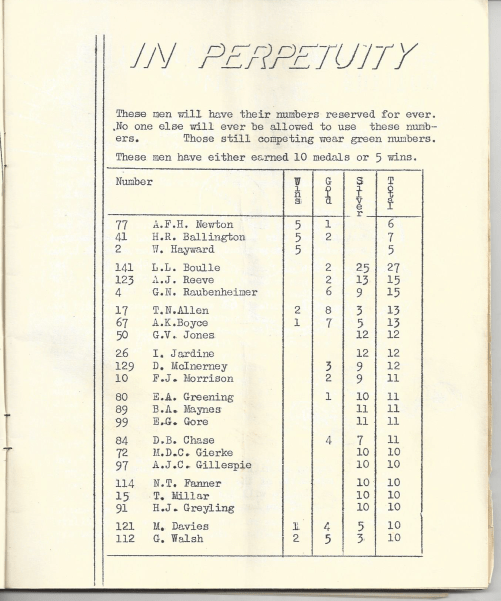
I have written elsewhere that I had met a few “green numbers” who had given me the benefit of their vast knowledge that there was only one way to prepare and that was by way of this thing called “LSD” or “Long Slow Distance”.   The “Slow” part was very easy in my case but one thing it taught me and I remain firmly committed to LSD to this day and it is almost impossible for anyone to shake me on this, is that it builds strength, stamina and endurance and if you are going to be going out there to run the better part of 90kms you are going to need to be able to get out there and run at a steady pace virtually all day. Incidentally here is the page from the 1968 brochure listing ALL the green numbers.  Compare the list to what it is today! The 2015 Green Number “Roll of Honour” has 126 pages of names!

LSD was the way I trained for that very first Comrades and that was the way I trained for all the rest of my Comrades and whilst my speed varied as I got faster, the need for strength was, for me, the key to it all and it paid off.

Anyway, let’s fast forward to Thursday, 30th of May 1968, the day before my first Comrades.

In those days there were no refreshment stations so we had our own personal seconds and in my case that job rested with my Dad and his Volkswagen Beetle and the afternoon before Comrades I had to make sure that the car was packed and heaven help me if I forgot to put anything into the car. I never quite figured that out because it was me who suffered if I did forget anything but it was me who was in trouble if I forgot to pack anything! Cooler boxes full of ice to keep the 10 litres of drinking and sponging water cold. The lemonade cold because that’s what I drank the “corpse reviver” in. “Corpse reviver was a mixture first invented by Arthur Newton in the 1920’s but then modified in the 1950’s by Ian Jardine and made up of glucose, castor sugar, bi-carb and salt in the correct measures and then mixed with the lemonade I mentioned. It might sound awful but it tasted very good and it worked very well.

In addition I had to make sure that the bucket and sponge was in the car as well as the “muti” box that had plaster, Vaseline, scissors, salt tablets, disprin (in case but very seldom used), the half-litre jug from which I drank my corpse reviver and of course, Deep Heat which was as useless as a tooth ache, and which I never actually used until the 1976 Comrades and when I did use it, it did absolutely nothing to help the cramp from which I was suffering that year.

I then had to be sure that my running kit was all there and that was my vest with number back and front as well as my track suit with number back and front.   That was a requirement and not optional. Our vest and shorts were cotton in those days and that was long before the days of the lightweight nylon type shorts and vests and when our shorts and vests got wet they also got fairly heavy and the vests tended to stretch and they ended up looking something like a mini skirt!

Then it was off to bed.

Race morning and off to the start in Durban. 

Incidentally for your first Comrades it wasn’t a requirement to belong to a running club – you had to be a club member if you ran more than once – entry fee was R2 and such things as qualifying was unheard of. I didn’t actually have to qualify for Comrades until my 12th Comrades although qualifying was introduced for novices in 1975, but only for novices.

There were no “goodie bags” or anything else like that.  1968 was well before the days of the Expo so registration at the start comprised couple of large white boards that were situated at the entrance to the City Hall and on which were written the race numbers of all the runners taking part and each of us had to present ourselves to the official at the board and show all four of the numbers I mentioned.

The two numbers on our vests and the two on our track suits had to be shown and the officials at the “registration boards” crossed these off with a thick black marker pen and we were registered and we made our way to the start line to wait for the gun. No seeding pens or anything like that.

This photograph may not have been the start of the 1968 Comrades but gives a good idea of what the start looked like at that time.

One thing that I consider myself very fortunate to have witnessed, was the late Max Trimborn himself giving the famous cock crow. Then the gun and we were on our way. Around 600 of us that year.

I don’t remember very much about the day but the half dozen or so things I do remember are as clear as though they happened yesterday.

We started outside the Royal Hotel in what used to be called Smith Street in Durban and up Berea Road. About halfway up Berea Road there used to be a famous Durban landmark, the Grand Tea Room and by the time I got there Jackie Mekler, Manie Kuhn and company had vanished over Tollgate and were on their way towards Pietermaritzburg and two very sweet old ladies standing at the side of the road chose the exact moment I ran passed them at the Grand Tea Room to say “they must have sent them off in batches this year”, so big was the gap between the top guys and we back runners. How to burst your bubble after you have done no more than about three or four Kms!

From the Grand Tea Room up and over Toll Gate down passed Westridge Tennis Stadium passed The Mayville Hotel (the route in those days) and up to Sherwood and 45th Cutting and on into Westville. In those days we went through the old centre of Westville and not on what is now the R103 so that meant another really nasty climb up Jan Hofmeyer to the Westville Hotel and to where my second met me for my first drink some 10 or so Kms from the start. My next drink after that was somewhere in Pinetown at around 20Km. A little different to the refreshment stations 3kms or so apart in the modern Comrades. Those stops by our personal seconds were assuming they didn’t get stuck in the huge traffic jams we had then so we didn’t have any definite place where we arranged to meet. It was a “more or less” meeting place.

The trip from the start to Drummond is pretty much a blank but I clearly remember trotting down into Drummond and looking at my watch and it was 11:08 and realising I had done 5 hours and 8 minutes for the first half and that all I had to do was to repeat that for the second half and all would be well.

Through Drummond and I caught up to a fairly new found friend, the bearded Charlie Warren one of the true comedians of the road who was not yet wearing Green Number 100, and as we started to climb a hill we made up on a young student from the Free State who wasn’t happy at all and Charlie asked him what was wrong and he said that “this hill is not nice Oom”.

Charlie’s response was “this is nothing, wait until you get to Inchanga” and proceeded to tell the young man all the horrors of the hill called Inchanga for the next 20 minutes or so. As we crested the hill we were climbing, the youngster, by this time, almost in tears at the thought of what lay ahead said to Charlie “where is Inchanga, Oom” to which Charlie replied “That was it”. So another runner learnt the Charlie Warren method of running Inchanga.

Charlie, the young man from Free State and I separated about a Km further and it must have been about 5km further that my next memory of that day is there. I came over a slight hill and a fellow standing at the side of the road shouted “He’s coming in. He’s coming in. Jackie’s coming in”. I stopped next to him to listen to his radio (no TV in those days) and to listen to Jackie Mekler winning his 5th Comrades.

I was thrilled. He had long been my hero but my immediate thought was that what I was going through could only last another 5 hours. It was just after 12 noon. In 5 hours I would either be at the finish or I would have to retire so the pain would be over so it wasn’t all that bad.

I remember nothing more until I got to Polly’s and that long horrendous climb after the second bend just after the bottom and it was a case of “vasbyt”. 200 paces run and 100 paces walk then 200 run and another 100 walk and so on until the top and it wasn’t long and there it was – PIETERMARITZBURG!

I looked at my watch and I knew. I was going to make it – and I was going to make it with around half an hour to spare. Maybe if I really pushed it I would even get there before 4:30pm.

In those days the time limit was 11 hours and it was down into Pietermaritzburg to the Collegians Club and it all happened so quickly.

I entered the grounds of Collegians Club in Pietermaritzburg in something of a dream-world and there was nobody around me at all as I made my way to the field to run around the finish area. It was nothing like it is today where it is cordoned off and there are hundreds if not thousands of people all screaming encouragement as you make your last few hundred metres to the finish line.

I don’t remember hearing any stadium announcer saying anything. It was just me and my thoughts, but there were no thoughts. Me and 89Kms from the Durban City Hall and virtually nothing between there and where I was at Collegians Club in Pietermaritzburg – and suddenly it was all over and the official watches stopped at 10:25:13, my splits 5:08 and 5:17. Nothing too much wrong with that! I had done it!

Thank you LSD. I will never stop believing in you! I still believe in you. I still don’t think that you train to run 90Kms by doing 21Km training runs – but hey that’s what I think!

In those days we didn’t get our medal when we crossed the finish line. That was given to us at the official “Medal Parade” a few weeks after the race when we gathered in Pietermaritzburg and our medal, engraved, was presented to us individually when we were called up. If you happened to be from outside KZN or if you couldn’t get to the Medal Parade, your medal was then sent to you by post.

What we were given was an official document of some sort to say that we had finished and this enabled us to travel to Pietermaritzburg and go to Lambert’s Outfitters in Church Street in Pietermaritzburg and to buy an official Comrades blazer and tie and I did that just as soon as I could after Comrades so that I had mine in time for the Medal Parade. The prices of the blazer and tie are quoted in the race brochure I still have and the blazer cost R17.50, the tie was R1.95 and a wire badge for the blazer another R4.50.

I still have my blazer after 48 years, even though it does look a little sad in its advancing age, but then, don’t we both!