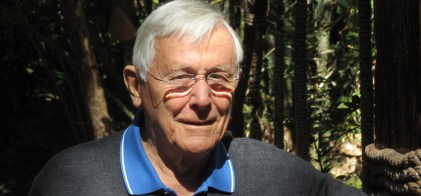
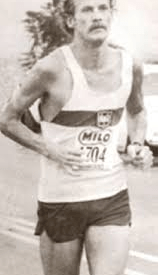
MY 60 YEARS AT COMRADES

Now that the dust has settled on the 90th Comrades Marathon in 2015, I thought it might be a good time to have a look back over the 60 years since my relationship with Comrades started on 31st May 1956. I haven’t been at all 60 races. I missed three of them but 2015 was the 57th time I have been at Comrades.

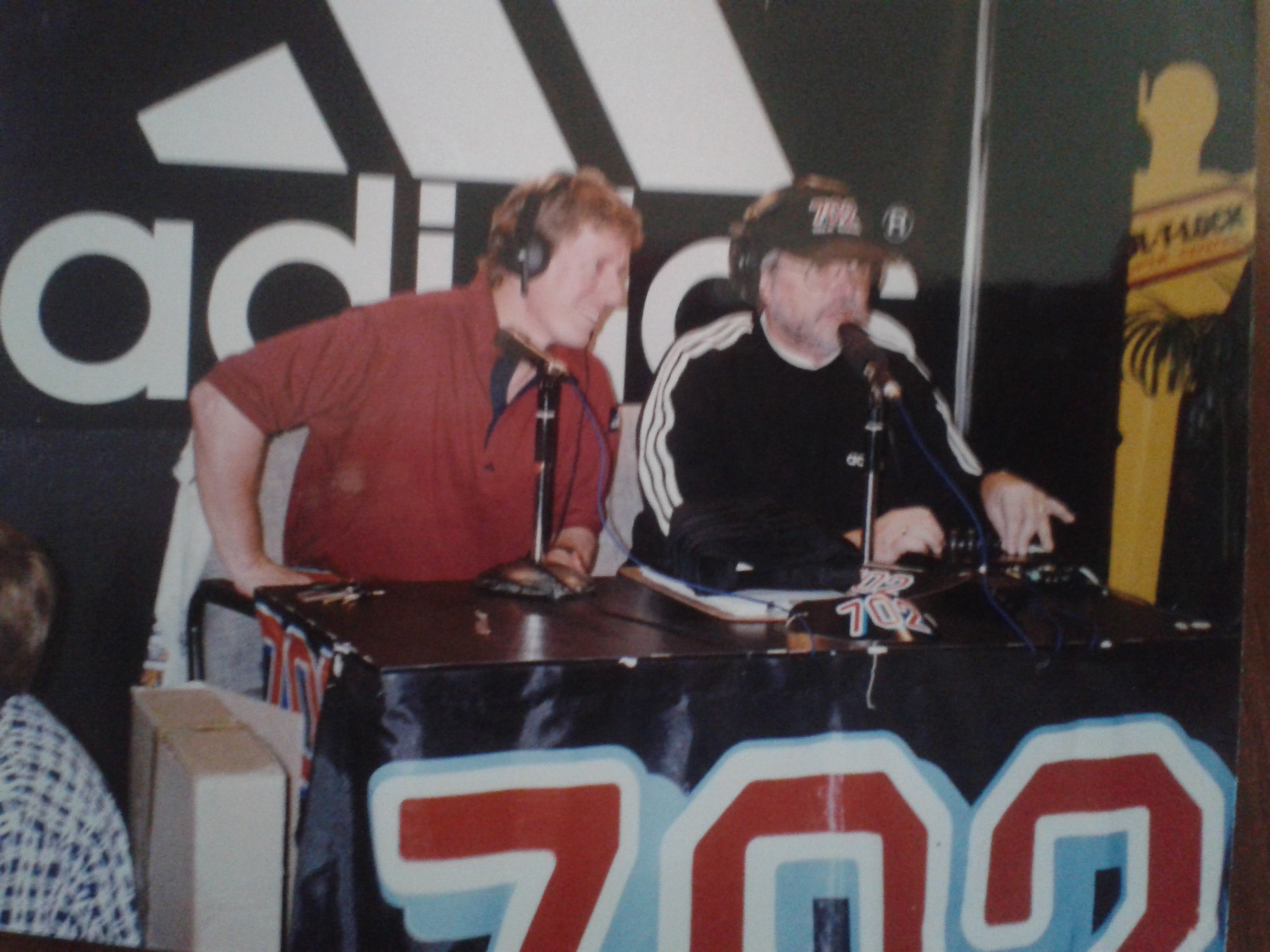
I have been fortunate to have done many things in Comrades over that time (except win it of course) beginning as a spectator, moving on to the job of second before the days of refreshment stations then to actually running the race 14 times and serving on the organising committee then I moved on to a radio journalist reporting on the race over 10 times for Radio 702 and also being fortunate enough to be able to present shows from the Expo. In this photo interviewing Andrew Hudson who at the time was opening bat for South Africa.
20141212_152753

At the same time I was also stadium announcer and  also for a period in excess of 10 years. It was during the stadium announcing time and whilst working with TV man Arnie Geerdts, we decided that it was our job to get the crowds worked into a frenzy before each cut off.

Also during the time as stadium announcer I had the honour of meeting the Late Nelson Mandela whilst I was doing the prizegiving. That will go down as one of the really major moments in my life.

Now back to a spectator and in 2015 writing these blogs that I know some people have enjoyed and also tweeting non training tips that help in preparation and on race day and again more very positive feedback.

Does this mean that my relationship with Comrades is about to come to an end? There is no chance of that. The love I have for this “happening” is just far too strong for that to happen and as long I am able to stand upright, it’s my intention to be at Comrades.

So what is this blog all about? What I would like to do is to summarise in as short a post as possible the 60 years since I first met this race.

1956 and I met Comrades for the first time and the race was won by Gerald Walsh. I was immediately captivated by the whole event and remember that there were under 100 runners at the time.

1958, Jackie Mekler won his first of five Comrades. A childhood hero of mine and today I am proud to call him a friend. Such is this race.

1961 George Claasen, a headmaster from Middelburg in what is now Mpumalanga won the race against all odds. “Oom George” was the father of Springbok Captain, Wynand Claasen and in later years was very involved in road running and still has a marathon named after him in Centurion that’s usually one of the last Comrades Qualifiers.
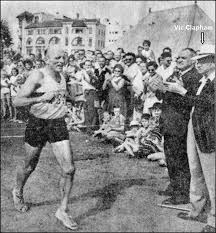
GEORGE CLAASEN

1962 a team from The English Road Runners Club came to Comrades to run against a local team. Englishman John Smith won the race and apart from Jackie Mekler taking second place, the English took the remaining top places.

JOHN SMITH 1962

1965 saw the wettest Comrades in history. A very happy Englishman Bernard Gomersall is reported to “done a jig” when he saw the weather which suited him. He won the race easily. Interestingly in 1968 Gomersall came back again and was in a state of near exhaustion when he finished in 7th place.

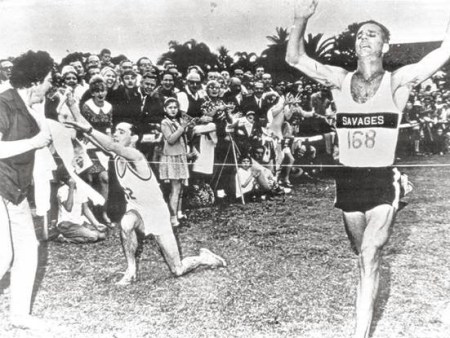
1967 the drama year when Tommy Malone collapsed at the finish line and was beaten by one second by Manie Kuhn in what is the closest finish ever. Official times have it at one second but the general feeling is that with the sophisticated timing equipment we have today, the time would probably have been closer than one second.
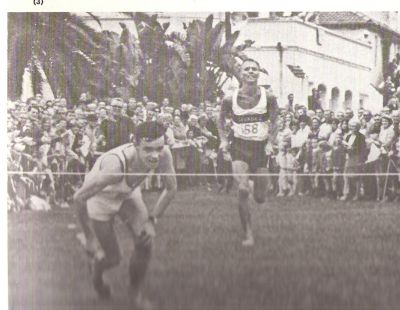
comrades 1967 

1968 and Jackie Mekler won his fifth Comrades Marathon and I ran my first one. Around 600 runners and I finished in 320th position in a time of 10:25.

JACKIE MEKLER1969 and Dave Bagshaw won the first of his three successive wins. Going for his fourth win in 1972 Englishman, Mick Orton caused a major upset by beating Bagshaw.  Orton was part of the Tipton Harriers team that won the Gunga Din Trophy.

1975 and the Golden Jubilee race and for the first time the race was open to all runners within certain age limits and Betty Cavanagh was the first official woman’s winner of a Comrades medal.

BETTY CAVANAGH

The race that year was limited to 1500 runners because organisers were concerned that the roads couldn’t handle any more than that. 1975 a special year for me in that I ran my best time. A very modest 8:29 but a time of which I am proud.

1976 and a new hero on the scene. Alan Robb won the first of his four Comrades. Three in a row and then 1980 for the fourth win. Alan has now run over 40 Comrades. ALAN ROBBThen came the 1980’s and Bruce Fordyce. Eight wins in eight years and one of the finest tacticians I think Comrades has ever seen. He ran his race and according to his plans and won. He also was a master mind games player and destroyed more than one runner who tried to de-throne him. BRUCE FORDYCEBruce didn’t run in 1989, choosing instead to run an international although unofficial 100km race in Stellenbosch which he also won and this left the door open for a new winner and that was Sam Tshabalala, the first black winner of Comrades, who took the lead at Tollgate to upset the dreams of KZN favourite, Willie Mtolo who had to be content with second place.
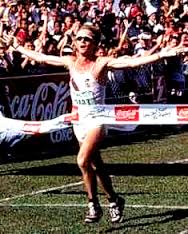
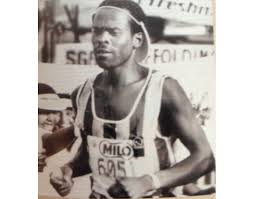
SAM TSHABABALA

And another big happening in the 1989 Comrades was the amazing run by Frith van der Merwe who finished in 15th position overall to set a women’s race record of 5:54:43 that still stands after 26 years.

FRITH

Bruce Fordyce was back again in 1990 to win his 9th Comrades and his last competitive race and then we moved into the 1990’s with start of the big foreign wave of winners.   1993 it was German, Charly Doll, 1994 the American Alberto Salazar who used a completely different strategy to that we had seen before when he basically went to the lead In Westville on the up run – and stayed there. Some felt (and I was one of them) that he was lucky not to have been caught by Nick Bester near the end. Bester was significantly stronger than the American.

A sprinkling of South African winners like Shaun Meiklejohn and Charl Mattheus but it was mainly time for the East Europeans and particularly the Russians who made the Comrades theirs for the better part of 10 years.

2000 was a big year for Comrades. The “Millenium Race” attracted around 24,000 runners, the largest field ever seen in Comrades and the time limit was extended to 12 hours to accommodate those hopefuls who wanted to be part of this amazing event. 2000 also saw Comrades with the only female Chairperson (she actually referred to herself as Chairman) in its history when the Late Alison West took the event into a new century.

The only multiple winner we have seen in the last 10 years has been Zimbabwean Stephen Muzhingi who managed a hat trick of wins in 2009, 2010 and 2011 and eventually the 90th Comrades in 2015 saw Gift Kelehe win and join big brother Andrew who won in 2001 to become the first brothers ever to have won Comrades.

There you have it, a summary of my 60 year relationship with this incredible “happening” called Comrades Marathon.

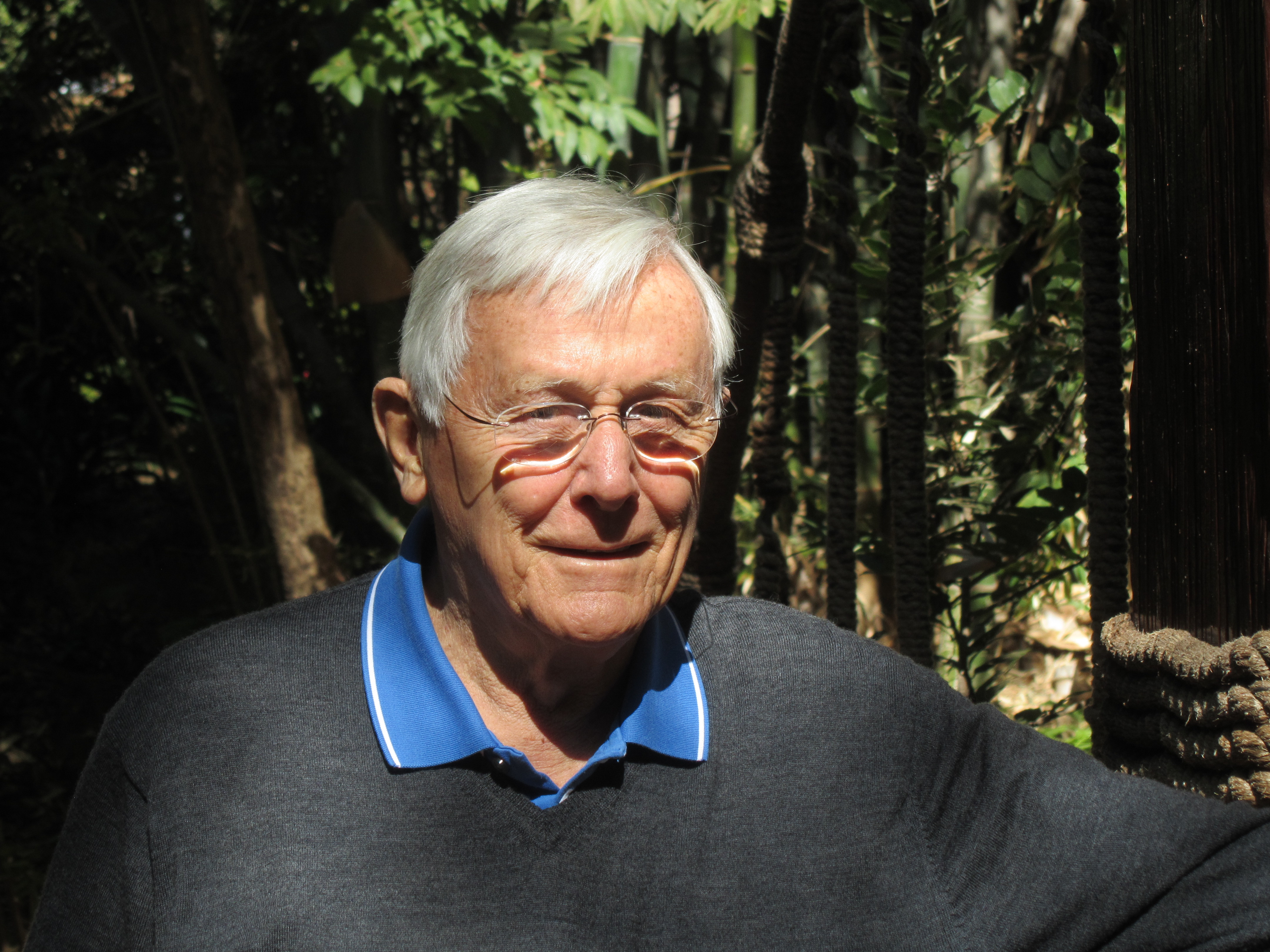
MICK WINN – LONG TIME COMRADES BOSS and FRIEND

I have referred to Mick Winn on numerous occasions as Chairman of many different organisations in the road running world from Collegians Harriers, Comrades Marathon, CMA and South African Road Running Assoc to name but a few. Mick has been in the public eye for many years as the spokesman for these various bodies but how many people actually know what makes this man tick.

Mick Winn

I have known Mick since 1971 but when I wanted to write this blog I found that whilst he’s a very public person, Mick is actually a very private person so I asked him to tell me who Mick Winn is


D.J.   You’ve been involved in Comrades for a long time. What caused this love of Comrades to start.

M.W.      In 1956 I moved from Durban to Pmb when I purchased my first pharmacy.  I played golf believing that it would promote my customer base, which inevitably resulted in spending extended periods at the 19th hole.  I was also a smoker, which I realised detracted from the healthy lifestyle that I was presumably expected to project in my profession.  In 1963 I decided to give up both smoking and golf.  I lived on the Comrades Marathon route and was woken one morning (31 May) to the sounds of extra traffic on the road, followed a short time later by the sounds of traffic going in the opposite direction followed by guys running.  Some slender and very fit looking, others quite portly and running much slower.  I later discovered that I had witnessed Comrades runners and their entourages on their way to Durban.  My overwhelming impression was – if they can do it, so can I.  Hence began a 52 year association with the greatest race of them all.


D.J.      Whilst you were still running you also developed an interest in road running  (mainly) administration. How did that start? How long were you at the helm of Comrades and were you instrumental in the establishment of CMA? 

M.W.      Within the year following completion of my first Comrades Marathon I joined Collegians Harriers Athletic Club (it was not a requirement to belong to a club for your first Comrades in those days).  I have always been the sort of person who becomes actively involved and within a couple of years I was voted in as chairman of the club.  Comrades in those days was an ordinary club race, organised by small sub-committee of Collegians Harriers, and as chairman I automatically became a member of the sub-committee.  I continued as chairman for 12 years, ran 12 Comrades (in times varying from 10:52 to 6:35).  During this time I became chairman of both the main club and the Comrades committee.  We progressed from being a sub-committee (with its own finances) and from being financially embarrassed (two of us had to stand as guarantors for the payment of medals which were manufactured in England by the Royal Mint) to a situation in which there were surplus funds.  The cross-country section of the club made a strong move to have these funds utilised to purchase a small bus to transport athletes to and from cross-country events , which was strongly opposed by the Comrades committee, the members of which were far more concerned with protecting the future sustainability of the race.  The move was eventually circumvented by a vote within the club to form a separate autonomous association that would have total control over the race and responsibility for its assets.  Obtaining permission to have an association recognised by the provincial athletic authorities is another long story in itself.  I was elected as the founding chairman of the Comrades Marathon Association and continued until 1985. 


D.J.      I remember that you were instrumental in changing the NMRA from a primarily Durban organisation to a true provincial body. It seems when you believe strongly in something you’ll move heaven and earth to correct what you consider incorrect. 

M.W.      During this period (approx 1975 – 1985) road running in South African was growing at a phenomenal rate.  The charisma of Bruce Fordyce and the advent of television coverage of  road running were to a very large degree responsible for so much attention being directed to the sport.  Logically the demands on the provincial body (Natal Marathon Runners Association) necessitated an expansion of that body as well.  It went hand in glove with the formation of the SA Road Running Association which adopted a national stand point and initiated the implementation of minimum standards and requirements that the organisation of a road race which now must comply with (medical facilities, accurate course measurement, referees & technical officials.  My chairmanship of NMRA was 3 years and 12 years with SARRA.


D.J.        Certain people are blessed with the ability to speak in public in a very strong way. You have that ability. Is it a natural gift or did you learn it through Toastmasters or some other such body? 

M.W.      I am not at all sure that I have an ability to speak well in public.  I am of the view though that if you believe strongly enough on any subject you will have no difficulty in articulating your thoughts on this subject.  I never belonged to Toastmasters but did participate in a Dale Carnegie course when I first moved to Pmb.


D.J.      Running, and Comrades specifically, has changed over the last 20 or so years. When you look at “the old days” and now, has the change been good for the sport. 

M.W.    There have been enormous changes in every facet of the CM except the most important and intrinsic ones – the ethos and spirit of the race.  Multi-sponsorship, media attention and larger fields have led to ever-increasing demands in terms of organisation and technology, but at the end of the day it is still a footrace between Durban and Pmb and the basics remain the same.  There are just a lot more frills today.  It will be remembered that Comrades was the first major sporting event in the country to be opened to men and women of all races in 1975.   This in itself led to an increase in numbers, bearing in mind that the sport of running is achievable to almost everyone.  Investment in equipment is minimal unlike many sports.  Fortunately the growth has been gradual and the organisers have been able to keep pace with it.  From a race which was organised completely by 5 men in the lounge of someone’s home to a fulltime staff contingent of 13 operating from a Comrades owned museum and administrative headquarters is proof of such growth.  It has been incredibly good for the sport.


 D.J.      South Africa is definitely no longer in the league it was in the 90s in terms of marathon runners when we had the likes of Mtolo, Tsebe, Peu, Thugwane and others. Is it because development has been left behind or are the runners just not there.

M.W.        As you suggest South African road running is certainly not in the same space it was in the 1990’s.  The ability must still be out there but unfortunately it remains undiscovered and/or unfulfilled.  These days athletics administration appears to be more focussed on position, power and protocol than on the development and promotion of its athletes.  The current road running commission in ASA bears no resemblance whatsoever to the dynamism of SARRA in former years.  SARRA’s focus was not only improving the sport, but also incentivising the athletes, encouraging and providing competition and opportunities for excellence.  More and more athletes are discovering the sport, but few are attaining the heights of those years.


D.J.        One of the things I have always wished for is to see one of my children come into the finish of this passion we call Comrades. Describe how you felt in 1979 when Graham came in and you met him in the finish area.

M.W.      The picture taken on the finish line of Comrades when my son Graham finished tells it all.  He was only 18 years old (acceptable entry age at that time) and finished in a time of 7:12.  He was almost beyond exhaustion and seeing your son in that condition is heart-breaking.  His grit and determination is still manifest today and he shows it in almost everything that he does.  He is one of South Africa’s leading event equestrians and has represented South Africa at World Championships.


D.J.    In terms of your own running, I don’t know if people realise that you were an above average runner. You have your Comrades green number. You have also run at least one 100 miler and a pretty good marathon PB.

M.W.    Twelve finishes for permanent number 138, all consecutive until the demands of chairmanship put an end to the challenge.  Worst time was first run – 10:52 and best time 6:35.  PB Marathon time was 2:45.  Did one 100 Miler (160km) on the track – finished 6th in an overall time of 15 hours, something.


D.J.      Finally, do you think that the passion Mick Winn has for Comrades will ever wane? I know you have a new idea of compiling untold or forgotten Comrades stories.

M.W.      Does the passion that anyone has for Comrades ever wane”  Mine certainly hasn’t..  I have been physically present at every race since 1964 – 52 years with one exception. – Cheryl gave birth to our son, Simon on Comrades day in 1986.  He missed the gun by 50 minutes giving both the doctor and me the opportunity to watch the race in its entirety on TV.  It was a truly unique coincidence for our son to have been born on the day that means so much to both of us.


TOMMY MALONE AND THE 1967 COMRADES FINISH :

I have known Tommy Malone for a long, long time and I have read many stories of that Comrades in 1967 when Manie Kuhn beat him by just one second to record the closest finish in Comrades history and it’s unlikely that closest finish will ever change.

Of the many stories and not so much film footage I have seen of that finish I have yet to see the entire story from Tommy’s side anywhere and I have always thought that was strange, but when you know the man as I do, it’s not really surprising because he is a modest man who I doubt would try to make excuses and who has accepted that he was second and beaten my Manie Kuhn.

This is perhaps one of the most famous and talked about photos in Comrades history and the saddest part of it is that Tommy Malone is better known for coming second in 1967 than he is for winning the 1966 Comrades by the biggest margin since the sixties.

There have been many comments by many people about what was thought to have happened ranging from cramp to a car having hindered his entrance to the narrow run in at the Drill Hall where the race finished on those days on the down run. Having finished there myself a couple of times, I know it was a narrow entrance and in those days no such thing as road closures.

This has all bothered me for a many years so I sat with Tommy and asked him if the story from his point of view has ever been told and recorded and it seems that only bits and pieces have been told. When he told me this, I asked him if he would mind telling me the story of what actually happened as he saw it.

This is Tommy’s story. It is not an excuse. It is not a “blame anyone story”, it is simply what happened on 31st May 1967 as seen by the man who finished second.

I asked Tommy to go back on that Comrades Day and to tell me the story from there so here it is.

A group of runners went through Drummond together and on that nasty little hill coming out of Drummond, Tommy made his break from the pack and regarding himself as strong on the hills set out to tackle Alverstone and Botha’s Hill and the little climb into Hillcrest by which time he was out in front and alone. Remember that in 1967 there were only about 600 entries, so being alone during the race was quite common.

Down through Kloof, into Pinetown, up over Cowies Hill and down the other side and into Westville and then it happened. He was hit by severe cramp in his right calf muscle that brought him to a walk. His seconds were quick to react and they ran to a house alongside the route and asked whether the people living there had hot water to ease the cramp. They got the hot water, put it on his calf and it did no more than burn his leg.

His seconds asked him if he was able to run for another hour because that was all that was necessary to get to the finish. Tommy wasn’t sure but off he went.

In those days the run into Durban was very different in that it went passed the Mayville Hotel and down to the bottom of the long climb up passed Westridge Tennis Stadium and Tommy went up there but with his leg bothering him fairly badly because of the cramp. Over the top of Tollgate and the downhill run of around 5Km to the finish and someone shouted to him “If Kuhn had roller skates he couldn’t catch you”. Tommy now happy that despite the pain in his leg he was going to be OK.

Did that comment cost him the race? Who knows?

What Tommy did tell me was that the cramp was certainly taking everything out of him and he was tiring but he made his way towards the finish at DLI which was inside Greyville Racecourse. To get there, the runners had to go round the outside of the racecourse, a sharp left under a subway and then another sharp left into the fairly short run to the finish line.

There have been stories over the years that the baton containing the traditional mayoral message between the mayors of the start and finish cities, was handed to Tommy at Tollgate but this isn’t correct. It was handed to him as he was about to turn into the finish run in by an official who was quite happy in the knowledge that he had given it to the man who was going to win.

At the entrance to the finish a taxi was offloading spectators who wanted to see the end of the race and Tommy had to run around the front of it to get into the grounds and this probably added about 5 seconds to his time.

Did this cost him the race? Who knows?

What we don’t know is whether Manie Kuhn had to run around the taxi as well. If he did, the slight detour they then both had to do, balanced out.

Tommy, with the mayoral message in his hand made his way to the finish with about 50 metres to go and the idea that he was well clear of Manie who he believed was about two minutes behind him when he heard someone in the crowd yell “Come on Manie”. His immediate thought was that somebody was trying to pull the “proverbial”. He looked around and Kuhn was coming at him, as he described it to me, “like a steam train”.

Instinctively and sub consciously he surged forward and the calf muscle objected and gave in completely and down he went. He was fairly slow in getting up and whilst doing so turned round to see Manie bearing down on him.

Did that slow getting up and looking round cost him the race? Again, who knows?

When he did get up he tried to reach the finish line and down he went again and Manie Kuhn “flew” passed him to win the 1967 Comrades. The record books show he beat Tommy by one second but if you look at footage and the photo above that’s questionable if it was actually as much as that and modern technology could perhaps have shown it to be closer than that, but something else we’ll never know so we have to be content to settle for one second.

Not that it matters though. Tommy maintains that Manie won the 1967 Comrades, and as far as he’s concerned, there’s no doubt about that. Many people have asked him over the years whether, if roles were reversed, he would have helped Manie across the line to record a dead heat but as Tommy said to me “A Comrades win was at stake here” and if the roles were reversed, he would have done exactly as Manie had done.

One other story that I have read which is also not correct, is that after the loss in 1967, Tommy didn’t return to run Comrades for another four years, so distraught was he at the result. That’s not correct at all. Two weeks after Comrades, both his Achilles tendons gave in completely and it took several doctors and other medical people four years to get the very painful problem sorted out. Eventually Tommy was able to come back and run the 1971 Comrades and his aim now was to get his green number which he did in 1980 but give up being competitive? Not a chance. Maybe he was no longer able to win Comrades but his remaining eight finishes to get that green number were all silver.

A final bit of interesting information is that his race number – 62 – has gone green twice. Tommy turned it green in 1980 and some years later, his daughter, Amanda started running Comrades and in Tommy’s number 62 and in 2015 she turned the number green a second time.

So there you have it. Comrades 1967 according to Tommy Malone.

COMRADES – PASSION OR OBSESSION?

I have had people telling me that I have OCD about Comrades. Others have described it as a passion, but allow me in this chapter to tell you the story of my daughter, Merran, and then you can decide whether we both have OCD or whether we both have a passion for Comrades, or both.

Merran will be 39 years old in September 2016 and on Sunday the 29th of May 2016 she was at her 36th Comrades, her first one before she was yet a year old.

I grant you that for the first few years of her life she had very little say in the matter but now as an adult, a wife and a mother, she’s still there every year and I have no doubt at all that is some sort of record. I have thrown out a challenge to anyone who can beat that and no takers so we’ll take that as a record.  I also have little doubt that even after I am long gone that she will be at every Comrades.

Between us then we have been at 95 Comrades in total with the 91st race on 29th May 2016.   Another record perhaps?

As far as Merran is concerned, she has not just been a spectator at Comrades all those years when she was in her teens and now as an adult. In the early days and once again now, she had been and is now once again a spectator but she played an integral role in getting news of the race through to the listeners of Radio 702, and as she started to grow older, she got to know the route as well as I do.  She got to know the rules of Comrades and the way in which to best prepare for, and run Comrades. In fact had I not needed her on race day to help me, who knows, she may have been my only running child.

It wasn’t until the mid-nineties that her real involvement started. By this time I had stopped running because of the permanent injury that had affected me but I was well and truly part of the media then, having been involved since the mid 80’s. Those 80’s days were very difficult times to cover Comrades as cellphones had not yet come to South Africa and one year we found a company in Pietermaritzburg that had a system that by radio we contacted them and they then “patched” me through to the studio for my report. Pretty antiquated but it worked.

It’s very important to understand that the role of the written media and that of the electronic media differ significantly. The electronic media is “immediate” and therefore needs to be “live” and that applies equally to radio and television. The problem I faced is that I had to try to do the job with only one car on the route, that I drove as well as doing my reporting (we didn’t broadcast but only reported into news and sports reports), and just the help of my wife, Diane to write down information on pre-prepared sheets. Where we were what distance, and the lead runners and Merran travelling with us in the car so that she could back up the information Diane was taking down. One thing that did take my attention off the road and the runners and the traffic was the fun I used to have sticking the nose of our boldly branded Radio 702 news car in front of the television cameras much to the extreme annoyance of the TV crew.

I realised after a couple of years that Merran’s knowledge of Comrades was such that she was actually wasted in the news car and I made arrangements with the organisers for her to accreditation to travel on the media bus. She had to wrap up very warmly because in the early morning cold, particularly on the down run from Pietermarizburg, as she was exposed on the top level of the media truck.

What then happened was that Merran would phone the race numbers of the leaders to Diane and she would look them up from the list we had been given by the organisers. What often happened as a result of this is that we had an advantage over the other radio stations who had to rely on their vehicles to fight their way through the traffic to get to the front and were often blocked from getting to the lead pack by the very media trucks on which they could have relied.

We then discovered we had yet another problem. We couldn’t get to the women and who was leading that race further back in the field, but we had communication between the front truck on which Merran was freezing but doing a great job, and the truck further back following the women. As a result she was able to get info from the other media folk on the “women’s media truck” who by now had accepted her as a “colleague”.  She, in exchange for this information and with her intimate knowledge of the route, was able to give the rest of the media On her truck, (all written media) this information, route details, landmark information, etc. and everyone was happy.

When I had to break away from the lead procession to get to the finish to see the leaders coming in, I still had Merran sending information back to Diane who in turn was giving me the info I needed.

The result of this “family team” working for Radio 702 were often significantly ahead of other radio stations.

I was unbelievably happy when, after one Comrades, the boss man of the national radio station, called my News Editor, Chris Gibbons, to ask how many vehicles we had had on the road and Chris told him we had just one with one person on the press truck. He congratulated Chris on our job well done saying that we had beaten them with their 20 reporters throughout the race.

A very proud day in my radio days.

At the same time that I was reporting the race for Radio 702 I was also stadium announcer and again Merran played a major role on the announcing tower, assisting Diane to identify runners coming in at the finish so that I could announce them, but I still don’t know whether Merran and I have a passion for Comrades or OCD about it!

I’m happy with either because we both love this race!

MADIBA, TOP RUNNERS & ME

This is not the story of the Comrades Marathon. It’s not the story of the guts and the glory of the road.

This particular part of the story of my relationship with Comrades is not in any way intended to be a name dropping exercise at all. I am simply mentioning the people who, through Comrades, came into my life and had an impact on it.

One thing I clearly remember about my first Comrades in 1968 was that as we ran up what was then Berea Road in Durban the field was already spread out and the leaders passed Tollgate by the time we were half way up Berea Road and there were two elderly ladies standing at the side of the road watching “The Marathon” and one of them said to the other “They must have started them in batches this year”. By that time the leaders and eventual winner, Jackie Mekler were over the top of Tollgate and on their way to Pietermaritzburg.

Jackie was my big hero in those early days before I started running Comrades myself and he had already won it four times so it wasn’t strange that I should have stopped about 8km after Drummond to listen on the radio (no TV then) to commentary of Jackie coming in to win his 5th Comrades.

The following year Jackie didn’t win nor did he ever win it again but those 5 wins were enough to put him into the history books and into my book of heroes. Little did I know that in later years, when I was with Radio 702 that I would meet the five time winner and get to know him fairly well.

I have had the privilege of meeting four of the five male runners who have won the race 5 times or more. Hardy Ballington, Wally Hayward, Jackie Mekler and Bruce Fordyce.

The following year after Jackie’s fifth win it was the turn of Dave Bagshaw in 1969 to win Comrades and he won three in a row. Dave lived in Pinetown as I did and he would often join the “Jardine Sunday School” for some LSD (and it was slow) but during the week he trained very hard on his speed and to even think about running with him was out of the question.

I was transferred to Pietermaritzburg in late 1971 and it wasn’t too long before I met Mick Winn who was Chairman of Collegians Harriers and who would later go on to become Chairman of the Natal Marathon Runners Assoc and then the South African Road Runners Assoc and it was during this time that Mick persuaded me to make myself available to stand on the committee of Collegians Harriers and during my time at Collegians I started meeting more people who would go on to be Comrades winners.

Derek Preiss who was the winner in 1974 and 1975, I knew well and he was in fact out on a run with a good friend of mine, Bill Sim and he wasn’t feeling well so he turned home and left Bill to run on alone and whilst running on the pavement a car left the road and killed Bill.

Piet Vorster was the winner in 1979 and the first Pietermaritzburg winner since Reg Alison in the late 40’s. I remember in March 1979 a few of us from Collegians had gone away for the weekend to run the Stanger to Mandini race and we were all sitting around chatting about who we thought would win Comrades that year and very quietly Piet’s wife said, Piet’s going to win. Piet was running well that year but wasn’t one of the favourites.  Strange but after that, I didn’t for one minute doubt that Piet would win and as history shows, Mrs Vorster was right.

It wasn’t until after I stopped running and my radio years with Radio 702 started, that I really got to know some of the really big names in running and these included people like winners, Tommy Malone, Manie Kuhn, Alan Robb (four wins), Nick Bester, Andrew Kelehe, Shaun Miekeljohn, Alberto Salazar (the American who ran only once and that was in 1974 and won it) Charl Mattheus and of course Bruce Fordyce.

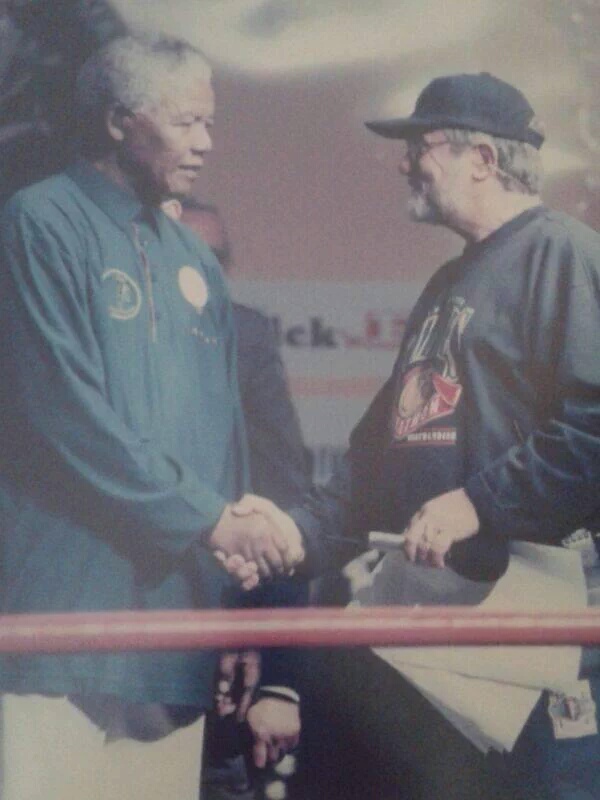
Heading the list of people I met through Comrades has to be former president, the late Nelson Mandela. He was the guest of honour and handing out the prizes for the 1996 race and that was one of the many times I was stadium announcer. That particular year I had been asked to do the announcing of the prize giving for both the stadium and the SABC and found myself on the stage less than 10 metres away from the great man.

I had asked the official Comrades photographer, Ivor Ginsberg, to be at the ready in the event that I should get close enough to Madiba to get a photograph with us both in it but it looked as though that wasn’t going happen as he was at one end of the stage and I was the other end. Meanwhile, Ivor was signalling frantically that I needed to move closer to Madiba because he wanted to take a photo because the light was fading and flash photography was not allowed because of the President’s eyes that were so bad after working for so many years in the lime quarry on Robben Island. I have been to that quarry and I have never seen anything with such reflection so easy to understand the condition of his eyes.

Eventually the chap from the Nelson Mandela Children’s Fund asked me whether I had met the President and if not whether I would like to do so. No hesitation. I was taken across the stage to meet him and it was one of the most amazing things I have ever experienced and I still remember it as though it was yesterday that is happened. As he took my hand to shake it, he said to me – and I will never forget the words – “It’s an honour to meet you”.

I was completely blown away. He then thanked me for what I – and 702 – had done for the Children’s Fund that year and I had worked hard on air to make it known and to get the word out of the charity drive. Then he smiled and said “How’s Debra – give her my love” referring of course to Debra Patta the well-known journalist with whom I worked at the time at 702.

After I came off the stage at the end of the prizegiving I told Dan Moyane (now eNCA morning anchor and former 702 news and morning show presenter) and with whom I was sharing the stadium announcing that year, what he had said to me in thanking me – and Dan’s immediate response was “He knows exactly who you are because he listens to 702 whenever he’s at his residence in Pretoria”.

It was an amazing experience.

ARTHUR NEWTON’S MISSING COMRADES CLOCK :


I spoke in my previous chapter about one of the big things that happened to me whilst on the Comrades Committee in 1979 was the “finding” of Noel Burree who had finished second in 1931 but I also was fortunate enough to have “found” something else as well during my year on the committee.

We have just a few weeks to go the 90th Comrades and I am sure that a lot of runners will be visiting the museum at Comrades House and if you had no plans to do so, change your mind and don’t miss it.

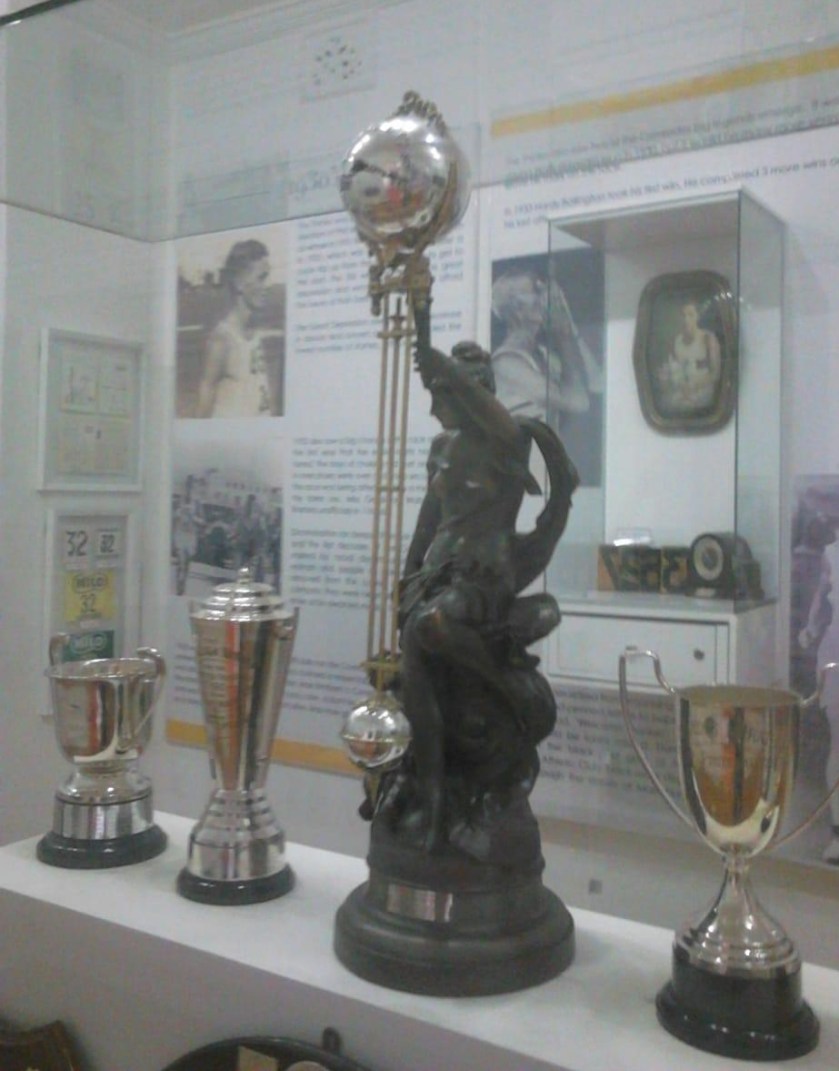
The clock presented to Arthur Newton by the Natal Witness in the early twenties is now on display in the Comrades Museum has had an interesting journey since being presented to the great man but not very many people know the story of that clock and how it eventually ended up in the Comrades Museum.

Photo courtesy of movies.org

Newton was a farmer in the Harding area in southern KZN and at some time – and it seems nobody is sure when – after winning it, he presented the clock to the Harding Town Board so that the clock could be on permanent display in the Harding Town Hall.

As far as we know it was there for many years until the Town Hall was destroyed by fire in the late sixties and one of the very few things saved from the fire was the Arthur Newton clock.

Whilst the Town Hall was being rebuilt the clock was simply put on top of a filing cabinet in the office of the Town Clerk and after the Town Hall was completed the clock was overlooked and left on top of the filing cabinet for around 10 years.

During the seventies I had been appointed as District Manager of the then, SA Eagle Insurance Co and part of my “district” included Harding and as SA Eagle were the insurers of the Harding Town Board it was my job to visit the Town Clerk on a routine basis.

On one of these visits, the Town Clerk was called away from his office for a short while and I spotted the clock on top of the filing cabinet and decided to take a look at it. There were files and papers scattered around the base but I was able to see an inscription plate on the base and when I moved the papers was thrilled to see what the clock was.

When the Town Clerk returned to his office I asked him if he knew exactly what the clock was and he shrugged his shoulders and said it had been there for years and he had no idea at all. By this time the clock was not working and whether it stopped during the rescue from the fire, again nobody knows.

As he had no idea where the clock had come from or its history, and didn’t really seem to care, I asked him if I could have the clock as I was a member of the Comrades Marathon Committee (which he knew anyway) and was given an immediate answer of “NO, it belongs to us”. After some begging and pleading he agreed that it could be “lent” to Comrades so I left with the precious clock in my car. Some years later the Harding Town Board eventually gave the clock to Comrades.

When I got back to Pietermaritzburg, I had absolutely no idea what to do with the clock and spoke to Mick Winn who was both Collegians Harriers and Comrades Chairman at the time and he too had no idea, so the clock was put on top of the safe in my office as this was long before the establishment of any sort of Comrades Museum.

What I did do however, was to see the editor of the Natal Witness as it was they who had originally presented the clock to Arthur Newton way back in the twenties and I told them about my find. They were very excited and sent a photographer round to my office to take photographs of the clock (with the prettiest girl in my office looking at the clock) and the story appeared in “The Witness” the following day.   At the same time I spoke to a friend of mine, Rod Webbstock, who was a watchmaker in Pietermaritzburg to ask him if he thought he could get it going again and what it would cost to do so.

Armed with an approximate cost I then went back to the editor of “The Witness” and suggested to him that it might be a good idea, as they had originally presented the clock that they should pay for it to be repaired. Without hesitation they agreed so the clock went off to Rod Webbstock’s workshop and he started working on it and eventually he got the clock working again. Whilst it was working it never kept accurate time though and stopped working when it felt like it and had to be persuaded to start up again.

After the repair it was returned to my office and spent quite a time sitting on the safe in the corner of my office. I was transferred away from Pietermaritzburg in August 1979 after that 1979 Comrades when I was on the organising committee and not knowing what to do with the clock I gave it to Mick Winn and he put it in his office at the pharmacy. There was still no museum. So it was relegated to once again spending its days on top of a cabinet.

Sometime later the Natal Museum in Pietermaritzburg gave a small corner of the museum to Comrades for the start of the Comrades Museum and the clock was one of the items that went there from Mick.

Later with the establishment of the CMA and the purchase of what is now Comrades House and the establishment of the Comrades Museum the clock found its new permanent home and it still stands there. Unfortunately the clock stopped working again in the years that followed between its repair by Rod Webbstock and the establishment of the Comrades Museum in Comrades House. On one of my recent visits to the Comrades museum I was told that the organisers have found somebody they think can repair it.

I look forward to seeing the clock returned to its former glory but if you visit the Comrades Museum at any time be sure to take a look at Arthur Newton’s missing clock. It’s had a very interesting life and if you get there before Comrades, I’m sure that Arthur Newton would be thrilled if you stop at Arthur’s Seat just before Drummond to give the customary greeting of “Morning Arthur” and put a flower in the seat, that you spend an extra few seconds there telling him you have seen his clock.

NOEL BURREE – 2nd IN COMRADES & WITHOUT A DRINK FROM START TO FINISH :


In 1979 I was voted onto the Comrades organising committee and it’s one of my regrets that I was only able to serve one year before being transferred away from Pietermaritzburg by my employers. Serving on the Comrades committee albeit only for a year was one of the most rewarding experiences I have ever had.

I was friendly with chap by the name of Pat Fletcher who was one of the managers at Wesbank and they had agreed to organise one of the refreshment stations I mentioned in my previous blog and he asked me whether it would be possible for Wesbank to have the loan of all the Comrades trophies to be put on show at their stand at the Royal Show in Pietermaritzburg that year. The Comrades committee agreed subject to trophy cabinets being made with armour plate glass to stop any possibility of a “smash & grab” and all was agreed.

The Royal Show started and on one of the show days I decided to go along to the Wesbank stand to see what had been done with the trophies.

Whilst I was standing there chatting to Pat I was aware of an elderly couple behind me looking at the trophies and I heard the wife say to her husband “There is the trophy your name should be on dear”.

I immediately stopped talking to Pat and turned my attention to the couple standing at the trophy cabinet. I told them I could not help overhearing the comment that the elderly lady had made to her husband and was interested to know which trophy they were talking about.

“That one there” she said pointing to the Anderson Trophy for the second person home.   “That’s interesting” I replied. “What year was that?”

The old man then chipped in and said “It was 1931 – a long, long time ago young man” (which I was at that time)!

Having more than a passing interest in Comrades it didn’t take me more than a few seconds to put a name to the person who had finished second in 1931 in what is still the second closest finish in the history of the race.

“Noel Burree finished second that year – but I thought he was dead” I said inserting my foot ever so gently into my mouth.

“No I’m not dead” the old man said very seriously.

While I was trying to figure how best to correct the embarrassing situation I had caused, Ronnie Borain who wrote for the Sunday Tribune came strolling past. Precision timing!

I called Ronnie and introduced him to Noel Burree and he made me promise that no other media person should get the story. This was before my days with Radio 702 so no problem there.

The Sunday following the day I had met Noel Burree the lead story in the Tribune was his and his 1931 run.

What had happened is that Burree had been living in the caravan park at Ifafa beach down the South Coast for years and every year without fail he had hitched his caravan to his car and had towed it to Pietermaritzburg to watch Comrades – and nobody knew he was there!

A day or two after “finding” him I went along to the Pietermaritzburg Caravan park to visit Mr & Mrs Burree and spent a fascinating afternoon with them while he told me the story of that run when he lost to Phil Masterton-Smith by 2 seconds.

The morning of the race he was due to be given a lift to the start, but the person with whom he had arranged this, didn’t arrive. He then found a bicycle but it had a flat tyre.

“What did you do?” I asked the “Old Man”

“What could I do” he replied “I ran to the start and arrived just in time to see the rest of the runners disappearing along Commercial Road in the direction of Durban”

We chatted a little more about how he had made up the distance and how the race had gone and then he told me that he had another problem at Drummond. The person who was to give him his drink wasn’t there.

I asked him when he had last had a drink. “That was to have been my only drink during the race” he said.

So what did he do, I wanted to know.

“I had no choice. I just had to run on and I had to finish the race without anything to drink”

He had actually run an entire Comrades and finished second after having run to the start without a drink along the road.

Noel Burree was an instant V.I.P. at Comrades in 1979 and for several years after that.

A charming and humble man and one of the stories of my involvement in Comrades I will always hold very near and dear.


COMRADES REFRESHMENT STATIONS ARE BORN. :

This is not the story of the Comrades Marathon. It’s not the story of the guts and the glory of the road. This is the story of refreshment stations but not as we know them today.  It’s the story of how they came about.  How they started and of how we knew nothing about them. 

It’s also my story.  My story of my involvement with Comrades over 60 years, the years that bring us to the 90th running of the race in 2015 and what I am hoping to do is to give readers a glimpse into the past at what things were like in those far off days back then.

1975, the Golden Jubilee had been a success in every way and we even saw a few of the old winners sitting at the finish line. In a previous chapter I mentioned Mick Winn who was Chairman of Comrades at the time of the Golden Jubilee and Mick himself was a pretty good runner.

Before I move on to the following years, one story about Mick came back to me as I sat down to write this chapter about how refreshment stations were born.  Mick, in 1975, wanted to run the race with it being the 50th but he had a problem in that the official luncheon for the dignitaries was at 1pm.  That was 7 hours into the race and Mick had to be at that luncheon.  Talk about the horns of a dilemma!

Run the 50th Comrades or be at the function which was his job as Chairman. I have never asked Mick how long it took him to make a decision but when the decision had been made, he ran the 50th Comrades and he was at the luncheon!

He crossed the finish line around 6:40!

Anyway let’s move on and 1976 saw the emergence of a new hero when Alan Robb won his first of four Comrades.

I on the other hand had a shocker and wracked with pain from cramp I managed to finish, doing the second half slower than Alan had run the entire race!

1977 and I ran my 10th and number 482 became mine forever and I decided to call it a day. That of course changed a few years later.

Nothing much happened in 1978 to make it stand out for me but 1979 was probably one of the highlights of my long association with Comrades. I found myself on the Comrades committee which at that time consisted of just five people. The biggest regret I have is that I was only able to serve for one year before my employers transferred me away from Pietermaritzburg.

Along I went to my first committee meeting and discussion revolved around the fact that following a part ban on seconding vehicles because of traffic volumes, that 1979 should be the year of a total ban other than those vehicles with express permission to be on the road. The discussion went along well and then I was told that I was responsible for refreshment “tables” (I don’t think they had the exalted title of “stations” at that time), and I was given a few rather tatty files used by the chap who had organised a few of these tables the year before with the partial ban. It actually turned out that they weren’t much use to me anyway.

I didn’t have a clue where to start. One thing that was sorted and a major relief was that Coca Cola had confirmed that they were on board for the drinks. The water was easy. A couple of tankers took care of that. Coke also confirmed that they would provide paper cups, not only for the Coke but also for the drinking water. This was long before the advent of water sachets.

The drinks and something to put the drinks into was sorted. Now remained just one little problem. The people to work on the refreshment tables – and reaching into the memory bank, I seem to remember there were going to be 22 of them. An obscure number but that’s what we arrived at. We worked out that given the number of runners we expected that we would need about 30 people at each table. 660 people! Where on earth was I going to find 660 people to get out of bed at some unearthly hour so give sweaty runners a drink.

The way to do it was obviously to approach companies to use their staff. Not only that but to provide their staff with T shirts at their cost branded with the company logo, as well as something to feed these brave souls. I thought that this wouldn’t be too difficult a task. 22 companies wasn’t that bad. One was already sorted when I told my staff what they were going to be doing on Comrades.

I then contacted my colleague at the Durban Branch of SA Eagle (I was manager of the Pietermaritzburg Branch) and talked him into it. Eventually and somewhat reluctantly he agreed and SA Eagle in Durban went on from the 1979 Comrades to be the first company to look after a refreshment station at Comrades for 20 consecutive years.

After a lot of hard work I managed to find the 22 companies to engage in this new thing in Comrades and in fact in road running in South Africa as I can’t remember any other race doing this. If I am wrong, forgiveness please.

What we then did was to get as many of them as possible together to teach them what they had to do and how much to pour into each cup whether Coke or water, which would be at different tables at the refreshment station.

Probably the most fun we had in staffing the tables was after I had approached a good friend at Wesbank, Pat Fletcher who was the ABM. He was very keen but he had nowhere near the 30 people needed so every lunchtime and any other time he was free, Pat would prowl Church Street in Pietermaritzburg and stop every pretty girl he saw and ask them if they would like to join the Wesbank table which was going to be at the top of Polly’s (and was for many years). Surprisingly it didn’t take Pat too long to find his “Wesbank Girls”, nor did he get any slaps across the face or any other part of his anatomy and got from each of them, their T shirt and shorts sizes, again without any smacks – and then he ordered one size smaller for each of them!

The big day came and as soon as the runners set off towards Pietermaritzburg, so did I to check that the plan and reality were in line. Perfect, until I was very close to Drummond and found a lot of crates of Coke, lots of paper cups and water – and no people!

Instant panic. Where was I going to find the company that had agreed to be there at that time of the morning. I had phone numbers but we had no cell phones in 1979!  I drove on towards Drummond not feeling great at all when my headlights picked up a very sad and cold and worried looking bunch of people. They told me in panic that the Coke truck hadn’t arrived and what were we going to do?

After I had reunited those people with the crates of Coke I made my way to the finish in Pietermaritzburg. As it turned out that was my only problem of the day and bonus was seeing my Collegians Harriers team mate Piet Vorster come across the line to win.

And so the birth of refreshment stations along the entire route.  Today Comrades runners could simply not survive without them and I am extremely proud to have played such an crucial role in the birth of the refreshment stations. 

1975 AND COMRADES CHANGES :

The 50th Comrades was run in 1975 and still known as “The Golden Jubilee” and a huge amount of fanfare came with the announcement of a “special medal” to celebrate this.

If there are those who consider this to be a political blog, it’s certainly not the intention. It is merely the story of a part of Comrades in which I was involved and at which I was present.

 20150309_173534

The Golden Jubilee wasn’t the only thing that happened for the 1975 race and in fact it had all started in the second half of 1974 when the organisers decided to take a proposal to Collegians Harriers, to whom Comrades belonged in those days to get permission from the South African Amateur Athletics Union (SAAAU) that the race should be open to all races and also to women. The rules were clear. People of colour and women were not permitted to compete in the same athletics events as men.

Shock and horror!

It’s interesting however that I had attended the SA Games in Pretoria in 1973 and a man who later became a great friend, Titus Mamabola, took part in the 5000 metre race at Pilditch Stadium in Pretoria in those games. I also remember a huge number of totally unnecessary comments from the spectators aimed at Titus. Titus, incidentally, the grandfather of 2012 Comrades winner, Ludwick Mamabolo.

The decision on whether to take the opening of Comrades to SAAAU or not, would only be taken if the members of Collegians Harriers agreed to this at the AGM. The decision by the Comrades Committee who wanted to open the race was by no means the final decision and was purely a recommendation.

I remember that AGM having more members attend than any other open meeting of the club as the news of this shocking proposal was by now public knowledge. It’s important to remember that this was in late 1974 and deep in the Apartheid years and in fact almost two years before the Soweto uprisings that I have always believed led to the eventual change in South Africa.

Anyway back to the AGM and all went smoothly and according to plan as any AGM should with confirmation of minutes and of the finances and the Chairman’s report. For the record the Chairman of Collegians Harriers and the Comrades Committee was the same person and he was Mick Winn who in later years went on to become Chairman of both Natal Marathon Runners Assoc and also of SARRA (South African Road Running Association).

After all the mundane general meeting stuff had been concluded, Mick put the Comrades and Collegians Harriers proposal to the floor. What followed was an explosion that could have been heard hundreds of kilometres away.

As I said this was 1974 and Apartheid years and everywhere one went one was bound to meet a person whose thinking was decidedly right wing and this is where the problems were. I have always believed that had Collegians not had a Chairman as strong as Mick, the meeting was destined to get completely out of control. Eventually the proposal was put to the vote and sanity prevailed and the decision taken that this be taken to SAAAU.

The fact that Collegians members had agreed didn’t by any stretch of the imagination mean that the race would be opened. The final decision on that rested with SAAAU. Again after a lot of talking and debating it was agreed that the race could be open to all races and not only to all races, but to women as well. That decision came with a ruling that most of us couldn’t understand at the time and in fact I still don’t.

The powers that be, agreed to allow the race to be open to all races provided that black runners wore “ethnic tags” on their vests denoting whether they were Zulu, Xhosa, etc. Didn’t understand it then and still don’t but Comrades was open. One would have expected then that this rule would be followed through to “Woman” or “Indian” or “Coloured” but that didn’t happen.

The next big problem facing organisers was the fact that with the race now being open and also the 50th that the roads wouldn’t be big enough to handle the expected fields. That was the official reason given so it was decided that the entries would be limited to 1500. Initially the rumour flew around that everyone had to qualify but then we heard that it would only be novices!!

The huge fields expected didn’t happen and 1686 runners entered and this was pruned to 1500. Of the 1500 only 20 entries were from black runners.

The qualifying time to be able to enter Comrades 1975 was a 3:30 marathon. I wasn’t on the Comrades organising committee at that time so I have no idea where both the rules about limiting the number of runners and the qualifying came from!

Both the limit on runners and qualifying requirements were scrapped for the 1976 race and although qualifying was introduced some years later, that was for a different reason altogether.

The big day came for the 50th Comrades and it was won by Derek Preiss in a time of 5:53:50. Preiss incidentally had won Comrades in 1974 as well and was the last person to do so in over 6 hours. He crossed the line in 6:02:49 in 1974, just a few minutes ahead of a 20 year old novice by the name of Alan Robb who finished in third place. 

There had been unofficial black runners since as far back as the 1930’s but the first official black winner of a Comrades medal was the late Gabashane “Vincent” Rakabaele who finished in 20th position. He finished 4th the following year and 8th the year after that. Rakabaele passed away in late 2009 but sadly very few people even remember his name despite the fact that he made such an impact on the race in the 1970’s.

There was also another category of runner competing for the first time and they were the women runners. There had also been a fair number of unofficial women runners over the years and in fact it was one of these brave ladies who ran regularly in the 1930’s, Geraldine Watson who donated the trophy for the last official finisher, but the first woman to win an official Comrades Marathon medal was Betty Cavanagh who came home in a little over 10 hours.

The Cavanagh Marathon still held every year in Estcourt was named after the Cavanagh family, Betty and husband Tony.

1975, the year that changed it all.

TAKKIES AND CORPSE REVIVER :

What I am hoping to do is to give readers a glimpse into the past at what things were like in those far off days back when I first started running. I have been asked at times to speak at club pre-Comrades evenings and I am always asked to speak about what things were like in the late 60’s and early 70’s. The reaction is worth seeing with the latter day runner amazed at what we did.

I mentioned in my previous chapter that I had met Clive Crawley (race No.1 and Robin Friedeman (race No.111) who had both agreed to help me in my training which they did by telling me that LSD existed and what the letters stood for and that was the sum total of the training advice although, they did give me advice on equipment, but let’s move away from the actual training I covered in my last blog and look at the build up to Comrades Day.

Both Clive and Robin told me that shoes were the first thing I had to get and that the only shoe to get was the good old fashioned Bata “takkie” (plimsole or sandshoe) that I could get at virtually any shop. What I had to do was to take the shoes to a shoemaker in Durban who knew exactly what to do as far as building up the heel to provide cushioning to “protect” you from the jarring of the road as he did this for almost all the Durban area runners. They both suggested that the “takkies” be those that laced to half way to avoid stitching, etc around the toes.

I also learnt from another 1965 gold medallist, Roland Davey, how to “soap” my takkies to stop blisters by mashing left over soap bars from the bathroom into a cream and filling the takkies with this cream and then to put the shoes on and run.

Messy. Very messy, but in all the years I wore soaped takkies, I never had a blister. The soap worked its way into the canvas of the takkie making the inside smooth and taking the shape of your foot. The first time you wore them after soaping them you left a trail of soap suds as you did if you ran in the rain!

Shorts and vests were ordinary cotton and of course when they were wet they held water and your vest looked a little like a mini skirt and if your shorts were even slightly too loose they slipped and I had one Comrades with exactly that and I had to do the last 20 or so Kms holding my shorts up!  Track suits were compulsory because organisers sent you four numbers and it was a requirement that you had a number on the back and front of both your running vest and your tracksuit top when you arrived at registration but I’ll talk about later.

The reason the numbers had to be on the tracksuit top was if it turned cold we wore our track suit tops.

Next job was to get my entry done. No computers in those days so no online entries. You had to find an entry booklet and one of the stockists of these was Kings Sports in Durban. This booklet also had all sorts of tips especially aimed at the novice. None of the tips of any great value it must be said. Race entry was R2 in those years and neither qualifying nor club membership was required.

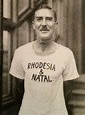
Those two rules only in your first Comrades. If you ran again in following years you needed to join a club. I had taken the decision to join the club to which most of my new found running friends belonged and on race day proudly sported the colours of Savages. As I had entered prior to joining Savages the race programme brochure shows me without a club.

The race numbers were made of a flimsy cloth and printed in the garage of one the Comrades committee members. The numbers were then posted to all the runners. As I said in my previous blog I was allocated race number 482.

As there were no refreshment stations back then and we needed to drink during the race we had to organise “seconds” and in my case that job went to my Dad in his VW Beetle. In the car we had a cooler box full of ice, two large containers of water (for sponging), a bucket (I still remember, but have no idea why, that the bucket was blue) into which went the sponging water.

Those of us who were in Ian Jardine’s group all drank what was called “Corpse Reviver”.  I think, but I don’t know for certain, that this was a concoction invented by the “Old Man” himself. The ingredients which were all in powder form were glucose (for instant energy), icing sugar (for longer acting energy), salt (to help with cramping) and incidentally my kidneys are still 100% and bi-carb to get rid of wind build up in the stomach and to help with nausea. I can’t remember how much of this powder mix went into a small bottle of Schweppes lemonade so we could drink it.  Certainly not scientifically proved to work but it did – and it tasted pretty good too.

So race day arrived on 31st May 1968 and off to the start and on the stairs of the Durban City Hall were the officials with two huge white boards with the numbers of all the entrants. We were required to show the officials all four of the numbers sent to us through the post and they then marked us off the boards and we were ready to run.

The famous cock crow by Max Trimborn who instead of firing the starters gun in the 1948 race, gave a loud cock crow to start the race. In 1968 he was at the start as usual and he gave the crow himself and along with a normal starter’s pistol, off we went.

About 15km up the road I met my Dad for my first drink and sponge and then after that more or less every 10km assuming he didn’t get stuck in a traffic jam on the route,  so I had something to drink about 8 times but in sufficient quantities that I didn’t dehydrate.

I finished in 10:25.